

Peptides for Muscle Growth: Which Molecules Are Being Studied and How Are They Related to Growth Hormone?
The article explores peptides studied in relation to muscle physiology, recovery, body composition, and growth hormone regulation. It compares their different mechanisms of action and emphasizes that changes in GH or IGF-1 do not automatically mean increased muscle mass. Each molecule should be evaluated individually based on the quality of the available scientific evidence.

GHRP-6: Research on a Peptide That Stimulates Growth Hormone Release
GHRP-6 is a research peptide that stimulates the natural release of growth hormone via the ghrelin receptor. In addition to GH, it influences appetite, metabolism, and hormonal regulation. It is primarily used to study hormonal processes and remains an experimental compound.

Official Statement: Addressing False Claims Circulating Online
In recent days, false claims have appeared online regarding Particle Peptides, the quality of our products, and our testing partners. In this official statement, we provide a factual response, verified information, and clarifications addressing the most common allegations currently circulating online.
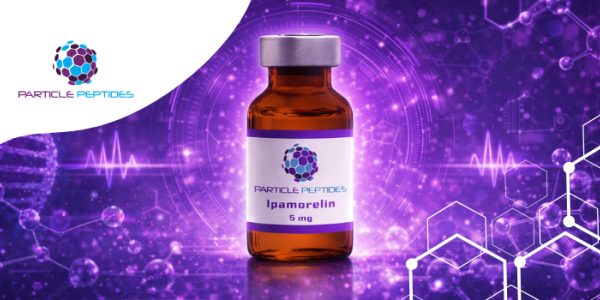
Ipamorelin: A Scientific Perspective on a Selective Growth Hormone Secretagogue
Ipamorelin is a selective growth hormone secretagogue known for its high receptor specificity and minimal impact on other endocrine pathways. This article explores its molecular structure, mechanisms of action, pharmacodynamics, and findings from preclinical and human studies.

Semax: A Scientific Perspective on a Neuropeptide in the Context of Contemporary Research
Semax is a synthetic neuropeptide derived from ACTH that has attracted scientific interest for its potential role in neuroplasticity, neurotrophic factor regulation, and neural signaling. This article reviews its molecular characteristics and findings from experimental research.

BPC-157: Mechanisms of Action and Biological Signaling in Preclinical Research
BPC-157 is a synthetic peptide studied in preclinical models for its role in cellular signaling, angiogenesis, and tissue integrity. It interacts with the nitric oxide (NO) system, influences cell migration, and supports extracellular matrix organization. Experimental data also suggest effects on vascular stability, epithelial barrier function, and neuronal homeostasis. However, current evidence is limited to in vitro and animal studies, and its safety and efficacy in humans remain unconfirmed.

Do Peptides Degrade During Shipping Without Refrigeration? Facts vs. Myths
Scientific data show that lyophilized peptides remain stable during standard shipping without refrigeration. Even under extreme conditions, only minimal changes in purity occur, staying within acceptable limits. Refrigeration is mainly necessary for long-term storage, not short-term transport.
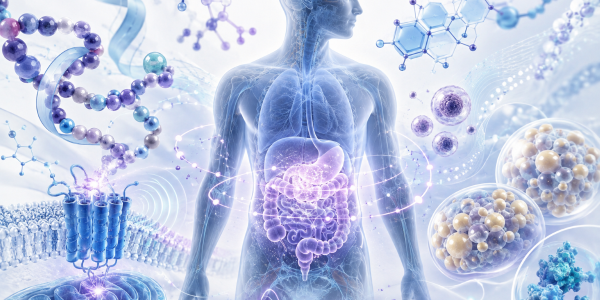
Peptides for Weight Loss: A Scientific Perspective on Metabolism, Mechanisms, and Research
The article explores peptides for weight loss from a scientific perspective, focusing on their different mechanisms, metabolic effects, and current research. It covers molecules such as AOD-9604, MOTS-c, Ipamorelin, CJC-1295, and Retatrutide, while also highlighting the importance of safety, study quality, and reliable research materials.
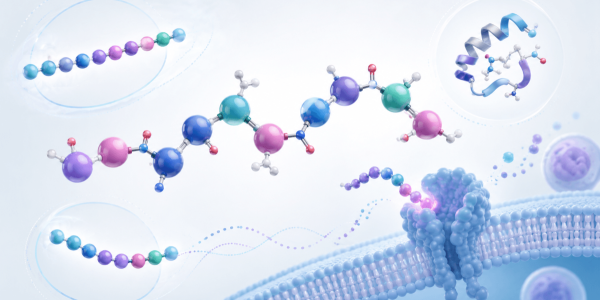
Peptides - What They Are, How They Work, and Why They Are the Subject of Scientific Research
Peptides are short chains of amino acids involved in a wide range of biological processes, including cell signaling, metabolism, hormonal regulation, and tissue regeneration. Because each peptide has a unique structure and mechanism of action, peptides are an important focus of modern scientific and laboratory research.

WARNING: Protect yourself from scams – shop safely at particlepeptides.com
Fake accounts and fraudulent websites are impersonating the Particle Peptides brand to mislead customers. Learn how to identify them, where to shop safely, and how you can help protect the research community.