Peptides have earned a place among the most sought-after molecules in overweight and obesity research in recent years. They can influence metabolic pathways that determine how quickly we burn calories, when we feel full, and whether fat is stored or broken down. Their effects allow for a deeper understanding of the mechanisms of weight regulation and open the door to innovative therapeutic approaches.
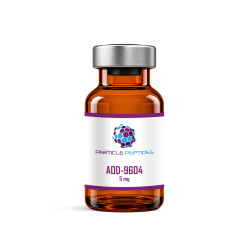
AOD-9604, lipolytic peptide fragment, which was derived from human growth hormone (HGH) during the late 1990s was modified from HGH residues 176-191. This modified compound primarily works as an element for fat burning and obesity treatment, while the exact mechanism by which this happens is still under research. It stimulates the breakdown (metabolism)...
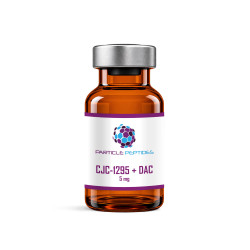
CJC-1295+DAC is one of modified synthetic analogues of growth hormone releasing hormone (GHRH). It acts as a growth hormone (GH) secretagogue stimulating levels of GH and insulin-like growth factor 1 (IGF-1), while preserving GH pulsatility. This stimulation in turn is the basis for its effects confirmed in various studies in animals and humans. This...
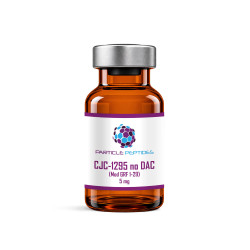
CJC-1295 no DAC (Mod GRF 1-29) is a synthetic peptide identical to CJC-1295 without DAC compound. It is truncated analogue of growth hormone releasing hormone (GHRH), which was developed in 1980s from original GRF 1-29, but with purposefully prolonged half-life to ensure better therapeutical use. This modified version was shown to have similar or even the...
Peptide GHRP-2, also known as pralmorelin, is a synthetic hexapeptide, one of the first growth hormone secretagogues, that is known for its muscle growth increasing, ghrelin stimulating, immune system strengthening or sleep improving properties shown in numerous researches. GHRP-2 activates the release of growth hormone (GH) by binding to the growth...
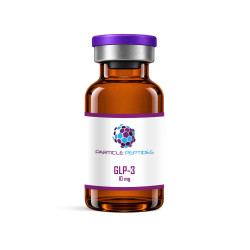
GLP-3 (LY3437943) is an innovative investigational peptide developed by Eli Lilly that functions as a triple agonist of the GLP-1, GIP, and GCG receptors—also referred to as a GGG triagonist. This combined receptor activation results in a synergistic effect on body weight reduction through increased energy expenditure, decreased food intake, delayed...
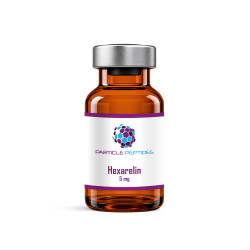
Hexarelin, also known as Examorelin, is a synthetic GH releasing hexapeptide, which activates growth hormone secretagogue receptor (GHSR) in the brain area. It is also ghrelin analog, similarly to other peptides such as GHRP-6. Beyond GH release and neuroendocrine effects, hexarelin might have also direct cardiovascular actions and cardioprotective...
Ipamorelin represents a synthetic pentapeptide derived from GHRP-1, which has a very potent growth hormone (GH) releasing properties with efficacy and potency comparable to GHRP-6, both in vitro and in vivo. Unlike other GH secretagogues, ipamorelin very surprisingly does not induce a significant increase in adrenocorticotropic hormone (ACTH) or cortisol...
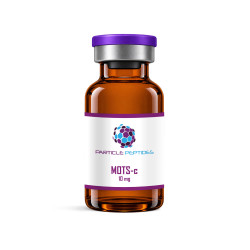
MOTS-c is a small peptide derived from mitochondrial genome. During metabolic stress, it moves to the nucleus to regulate the expression of nuclear genes, promoting cellular balance. It is co-expressed in various tissues with mitochondria, and found in plasma, though its levels decline with age. MOTS-c, discovered by researchers at the University of...