
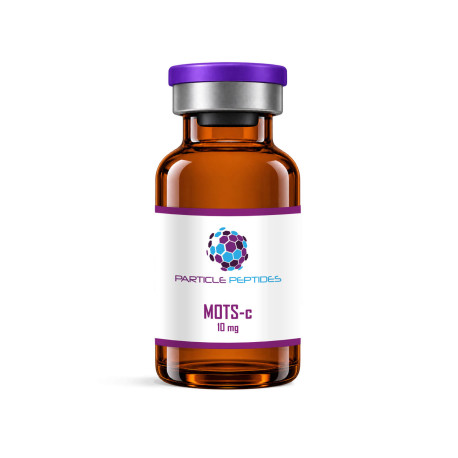
MOTS-c is a small peptide derived from mitochondrial genome. During metabolic stress, it moves to the nucleus to regulate the expression of nuclear genes, promoting cellular balance. It is co-expressed in various tissues with mitochondria, and found in plasma, though its levels decline with age. MOTS-c, discovered by researchers at the University of Southern California around 2012, improves glucose metabolism in skeletal muscle, suggesting benefits for diabetes, obesity, and aging. This peptide is being studied for its potential in treating cardiovascular disease, insulin resistance, and inflammation. Studies also explore molecular mechanisms and therapeutic potentials, suggesting synthetic biology as a new approach for developing and applying MOTS-c.
The product is intended for scientific research and development purposes only. Chemical substances shall not be used as a drug, medicine, active substance, medical aid, cosmetic product, a substance for production of a cosmetic product neither for human consumption that is any food or food supplement or otherwise similarly used on humans or animals. Intended only for in-vitro research, such as Receptor-ligand binding studies, Enzyme activity assays, Cell proliferation assays, Cell signaling assays, Epitope mapping, ect.
Peptides in lyophilized form are supplied in glass vials by standard shipping methods and do not require refrigeration. Short-term temperature fluctuations during transport will not reduce their quality and efficacy. Even at high summer temperatures, the peptides in lyophilized form are stable for several weeks.
Lyophilized peptides should be stored in a dry place, protected from light and moisture. The following storage conditions are generally recommended:
Before use, allow the vial to reach room temperature after taking it out of the refrigerator or freezer.
Once reconstituted, peptide solutions are generally less stable than their lyophilized form and should be stored under refrigerated conditions whenever possible.
The following storage conditions are generally recommended:
To preserve peptide integrity, avoid repeated freeze–thaw cycles, as these may accelerate peptide degradation.
Important: Most manufacturers recommend using reconstituted peptides within 4 weeks when stored at 2–8 °C. This recommendation is intentionally conservative and may not reflect the actual chemical stability of every peptide. In our own stability studies, Ipamorelin reconstituted in 0.9 percent sodium chloride showed no detectable degradation after 12 weeks of refrigerated storage. As peptide stability is highly sequence- and formulation-dependent, this result should not be extrapolated to other peptides without supporting stability data.
The shelf life of peptide solutions is limited. Freezing the aliquots will prolong the storage life of the peptide. What is globally accepted for peptides in solution is that they are generally stable for 3 or more weeks at +4°C and for 3-4 months at -20°C. Avoid repeated freeze-thaw cycles, as this can degrade the peptides.
MOTS-c with Mannitol consists of 16 amino acids, and it belongs to the family of the mitochondrial-derived peptides, bioactive hormones, which are important for mitochondrial communication, and energy regulation. It has significant roles in glucose and lipid metabolic regulation, as well as in disease research. Research indicates that this peptide can influence insulin sensitivity, making it of interest in the context of type 2 diabetes research, and has been studied for its potential relevance to age-related decline and diseases, with investigations into longevity and healthspan by mitigating common metabolic dysfunctions associated with aging. Furthermore, it is being explored for its potential in research into obesity, cardiovascular diseases, and cancer. The discovery of MOTS-c highlights the influential role of mitochondrial peptides in cellular and systemic functions, opening new research avenues for metabolic and age-related diseases.
[1]
MOTS-c is a novel peptide derived from mitochondrial DNA, which encodes 37 genes, including 22 tRNAs, 2 rRNAs, and 13 mRNAs. Mitochondria, ancient organelles with a semi-autonomous genetic system, still retain several bacterial-like qualities. MOTS-c, along with other mitochondrial-derived peptides (MDPs) like humanin, represents an expanded mitochondrial genetic repertoire with significant biological activities. These MDPs function as mitochondrial hormones, sending active signals at the cellular and organismal level. MOTS-c specifically targets skeletal muscle, influencing glucose metabolism and muscle uptake of glucose by increasing the expression of glucose transporters through AMPK activation. This activation is independent of the insulin pathway, offering an alternative means of influencing glucose uptake when insulin is ineffective or insufficient. Research findings indicate that MOTS-c influences muscle function, muscle protein deposition, and functional insulin resistance. It has implications for research into obesity, diabetes, exercise, and longevity, introducing a novel mitochondrial signaling mechanism for metabolic regulation within and between cells.
[2]
In studies involving mice, MOTS-c has demonstrated effects in research into metabolic dysfunction induced by ovariectomy (OVX), a procedure associated with increased adiposity and insulin resistance, common in postmenopausal women. MOTS-c treatment was observed to mitigate OVX-induced obesity and insulin resistance by influencing brown fat activation, reducing fat accumulation, and suppressing inflammatory responses in white adipose tissue. This intervention influenced energy dissipation and insulin sensitivity through AMPK pathway activation, underscoring MOTS-c's potential as a subject of research into menopause-induced metabolic dysfunction.
Moreover, recent research sheds light on MOTS-c's role beyond mitochondrial function, revealing its ability to translocate to the nucleus in response to metabolic stress. Once in the nucleus, MOTS-c regulates the expression of nuclear genes, particularly those involved in glucose restriction and antioxidant responses. This novel mechanism highlights the intricate communication between mitochondrial and nuclear genomes, suggesting a co-evolutionary process where factors encoded in both genomes cross-regulate each other to maintain cellular homeostasis. Additionally, MOTS-c's influence on fat metabolism is mediated through the activation of the AMPK pathway, a key regulator of cellular energy metabolism, offering potential insights into research applications in metabolic disorders and aging-related conditions.
Furthermore, MOTS-c exhibits exercise-mimetic properties and influences insulin sensitivity in aged and diet-induced obese mice. Through an unbiased metabolomics approach, it was found that MOTS-c administration reduced sphingolipid, monoacylglycerol, and dicarboxylate metabolism pathways, which are typically upregulated in obese and type 2 diabetes (T2D) models. This effect of MOTS-c is associated with improved insulin sensitivity, increased beta-oxidation, and prevention of fat accumulation, particularly in the context of obesity. Dysregulation of fat metabolism in mitochondria, possibly due to mitochondrial dysfunction, leads to a lack of fat oxidation, resulting in increased circulating fat levels and insulin resistance.
Research suggests a link between hepatic mitochondrial dysfunction and diet-induced insulin resistance, as mitochondria play a crucial role in ATP production and lipid oxidation. Dysfunctional mitochondria may contribute to ectopic fat accumulation in the liver, leading to insulin resistance and the development of metabolic disorders such as obesity, type 2 diabetes mellitus, and non-alcoholic steatohepatitis. Studies show impaired hepatic mitochondrial function in obesity and insulin resistance models induced by high-fat or high-fructose diets. Understanding the role of mitochondrial dysfunction in fat metabolism and insulin resistance sheds light on the mechanisms underlying metabolic disorders and offers potential research targets. MOTS-c's observed capacity to influence fat metabolism and insulin sensitivity highlights its significance in the context of metabolic dysfunction research and offers novel insights into further investigation of obesity and diabetes.
[3] - [6]
Plasma MOTS-c levels are associated with insulin sensitivity, particularly in lean individuals, but not in obese individuals. Although MOTS-c concentration remains similar between lean and obese individuals, it correlates positively with insulin resistance surrogates, such as the HOMA index and Matsuda index, only in lean subjects. This suggests that plasma MOTS-c concentration depends on metabolic status, with its association with insulin sensitivity altered in the presence of obesity. These findings highlight the potential of plasma MOTS-c as a biomarker for monitoring insulin sensitivity, particularly in pre-diabetic lean individuals, where changes in MOTS-c levels could serve as an early indicator of insulin resistance. Research into MOTS-c may offer insights into preventive strategies against insulin resistance and the development of diabetes. However, further research is needed to fully understand the role of MOTS-c in insulin regulation and its impact on metabolic homeostasis in humans.
[7]
MOTS-c has been studied in the context of osteoporosis, with findings suggesting it may influence the synthesis of type I collagen in osteoblasts through the TGF-β/SMAD signaling pathway. In experiments with hFOB1.19 cells, MOTS-c treatment increased cell viability in a time-dependent manner and upregulated mRNA and protein expressions of TGF-β, SMAD7, COL1A1, and COL1A2. The concentration of MOTS-c influenced the expressions of these genes, and knockdown of TGF-β or SMAD7 partially reversed the increase in collagen expression, indicating the involvement of the TGF-β/SMAD pathway. Thus, MOTS-c appears to promote osteoblasts to synthesize type I collagen via this pathway.
Furthermore, MOTS-c is implicated in influencing osteogenesis by stimulating the differentiation of bone marrow stem cells through the TGF-β/SMAD pathway. This is associated with increased formation of new bone, highlighting MOTS-c's role in both influencing osteoblasts and their development from stem cells. These findings suggest that MOTS-c may play a role in bone health and integrity, making it a potential subject of research in the context of osteoporosis.
[8], [9]
MOTS-c peptide has emerged as a potential factor of research interest in exceptional longevity, particularly in certain human populations such as the Japanese. Research suggests that a specific change in the MOTS-c gene, found exclusively in individuals with Northeast Asian ancestry, may be associated with this longevity. This change involves the substitution of a glutamate residue for the lysine normally found in position 14 of the protein, though the functional implications of this alteration are not yet fully understood. However, it is believed to affect both the structure and function of MOTS-c, potentially influencing its role in longevity research.
Dr. Changhan David Lee, a researcher at USC Leonard Davis School of Gerontology, highlights the importance of mitochondrial biology in research into extending lifespan and healthspan in humans. Mitochondria, as the primary metabolic organelle, are strongly implicated in aging and age-related diseases. While dietary restriction has been the main method for impacting mitochondrial function and longevity, peptides like MOTS-c offer a promising avenue for directly investigating mitochondrial function. This suggests that MOTS-c and similar peptides could have significant implications for research into extending lifespan and improving health in humans by targeting mitochondrial function.
[10]
The study investigated the association between circulating MOTS-c levels and endothelial dysfunction (ED) in patients without significant structural coronary lesions. Forty patients undergoing coronary angiography and endothelial function testing were included, divided into normal endothelial function and ED groups based on coronary blood flow response to acetylcholine. Aortic plasma samples revealed lower MOTS-c levels in patients with ED compared to those with normal endothelial function. Plasma MOTS-c levels correlated positively with microvascular and epicardial coronary endothelial function. While MOTS-c did not directly impact blood vessel responsiveness, pretreatment with MOTS-c influenced vessel responsiveness to acetylcholine in rodent models. These findings suggest that lower circulating MOTS-c levels are associated with impaired coronary endothelial function, indicating MOTS-c as a potential research subject in the context of ED.
Mitochondria-derived peptides (MDPs) like MOTS-c play crucial roles in regulating cellular metabolism and maintaining mitochondrial function and cell viability. Recent research highlights the relevance of MDPs to cardiovascular disease (CVD) research, with MOTS-c showing promise as a research subject. Studies demonstrate that lower MOTS-c levels correlate with higher endothelial cell dysfunction, a key factor in CVD development. Additionally, MOTS-c influences endothelial cell responses to signaling molecules like acetylcholine, affecting endothelial function. MDP dysregulation is implicated in various aspects of CVD, suggesting their potential as biomarkers or research targets.
[11], [12]


MOTS-c is a small peptide derived from mitochondrial genome. During metabolic stress, it moves to the nucleus to regulate the expression of nuclear genes, promoting cellular balance. It is co-expressed in various tissues with mitochondria, and found in plasma, though its levels decline with age. MOTS-c, discovered by researchers at the University of Southern California around 2012, improves glucose metabolism in skeletal muscle, suggesting benefits for diabetes, obesity, and aging. This peptide is being studied for its potential in treating cardiovascular disease, insulin resistance, and inflammation. Studies also explore molecular mechanisms and therapeutic potentials, suggesting synthetic biology as a new approach for developing and applying MOTS-c.