
- today

Semax is a synthetic heptapeptide derived from a fragment of adrenocorticotropic hormone (ACTH 4–10), whose hormonal activity was removed through chemical modification. Scientific interest in this molecule is primarily focused on its effects on the central nervous system, the modulation of neuroplasticity, and the regulation of neurotrophic factors. Semax has been studied mainly in Russian and Eastern European neuroscientific literature, where it has been investigated in various experimental and clinical research models.
Unlike classical neuroactive compounds, Semax does not act as a direct agonist or antagonist at specific neurotransmitter receptors. Instead, it functions primarily as a modulator of neural signaling and gene expression, making it an intriguing subject for fundamental neurobiological research.
Molecular Origin and Biological Characteristics
Semax is an analog of ACTH that retains the ability to influence neural tissue while lacking the corticotropic activity characteristic of the original hormone. Preclinical studies suggest that this modification allows activity within the central nervous system without stimulating the hypothalamic–pituitary–adrenal (HPA) axis.
Experimental research indicates that Semax can penetrate brain tissue and interact with neuronal networks. Rather than acting as a classical neurotransmitter, it appears to function as a neuromodulator with longer-lasting regulatory effects.
Influence on Neurotrophic Factors and Neuroplasticity
One of the most extensively investigated aspects of Semax research is its influence on the expression of neurotrophic factors, particularly BDNF (brain-derived neurotrophic factor) and NGF (nerve growth factor). These molecules play a crucial role in neuronal survival, synaptic plasticity, and the adaptive remodeling of neural circuits.
Experimental studies in animal models have demonstrated that Semax may increase the expression of genes associated with neuroplasticity in brain regions involved in learning, memory, and adaptive behavior. These findings suggest that the effects of Semax are not immediate but rather mediated through genomic and epigenetic regulatory mechanisms.
Neuroprotective Mechanisms in Experimental Models
A significant portion of the research has focused on the potential neuroprotective properties of Semax. In animal models of ischemic brain injury, reductions in the extent of neural tissue damage and modulation of inflammatory responses in affected regions have been observed.
These effects are believed to arise from a combination of mechanisms, including regulation of oxidative stress, modulation of excitotoxic processes, and stabilization of synaptic connections. Importantly, these observations come from experimental models aimed at understanding neural responses to injury rather than confirming therapeutic efficacy.
Cognitive Processes and Behavior in Preclinical Research
In behavioral animal models, Semax has also been investigated in relation to learning and memory processes. Some studies have reported changes in animal performance in spatial orientation and adaptive learning tasks, which are interpreted as potential consequences of altered synaptic plasticity.
These findings are primarily significant for basic research into cognitive mechanisms, as they highlight the possible role of peptide modulators in regulating neural networks.
Anti-Inflammatory and Immunomodulatory Signaling
Some experimental studies suggest that Semax may influence the expression of cytokines and other inflammatory mediators within neural tissue. This effect has been observed particularly in models of acute brain injury, where inflammatory responses contribute to secondary neuronal damage.
From a scientific perspective, this aspect is especially relevant for studying the interaction between the nervous and immune systems rather than serving as evidence of clinical effectiveness.
Limitations of Available Data and Scientific Context
Although there is a substantial body of experimental and regionally focused clinical research literature, most available studies are limited in scale and originate from a single geographic region. Large, internationally standardized clinical trials that would allow definitive conclusions regarding the efficacy or safety of Semax in broader populations are still lacking.
For this reason, Semax is currently regarded primarily as a research neuropeptide, used to explore mechanisms of neuroplasticity, neuroprotection, and peptide signaling in the brain.
Conclusion
Semax represents an interesting subject of neurobiological research that, in preclinical and experimental studies, demonstrates the capacity to modulate neurotrophic factors, influence synaptic plasticity, and interact with neural responses to tissue damage. Its importance lies primarily in expanding knowledge about peptide regulation of the nervous system rather than in confirmed clinical applications.
Future research will be crucial for clarifying its mechanisms of action and for determining to what extent these experimental observations may be translatable to clinical practice.

Sources
- Ashmarin, I. P. et al. (1997). Semax as a regulator of gene expression in the brain.
Neuroscience and Behavioral Physiology. PubMed. - Kozlovskiy, S. A. et al. (2012). Semax influences BDNF and NGF expression in the rat brain.
Bulletin of Experimental Biology and Medicine. PubMed. - Gusev, E. I. et al. (2005). Neuroprotective effects of Semax in experimental cerebral ischemia.
Neuroscience and Behavioral Physiology. PubMed. - Strelnikov, A. V. et al. (2006). Effect of Semax on inflammatory cytokine expression in brain tissue.
Bulletin of Experimental Biology and Medicine. PubMed. - Myasoedov, N. F. et al. (2011). ACTH-derived peptides as neuromodulators: focus on Semax.
Journal of Peptide Science. PubMed. - Semax – NCBI overview and linked publications. PubMed / PMC database.
Research Quality Begins with Peptide Quality
At Particle Peptides, we believe that reliable research begins with reliable materials. That is why our research peptides are manufactured on cGMP-compliant production lines by a global pharmaceutical CDMO, and every batch undergoes independent third-party testing for:
- Purity
- Identity confirmation
- Peptide content
- Endotoxin levels
- Heavy metals (Class I & II)
- Microbial contamination (TAMC & TYMC)
Transparency and independently verified laboratory data form the foundation of high-quality scientific research.
Disclaimer: All Particle Peptides products are intended exclusively for scientific research and laboratory use. They are not intended for human or veterinary use, nor for the diagnosis, treatment, cure, or prevention of any disease.
Related products
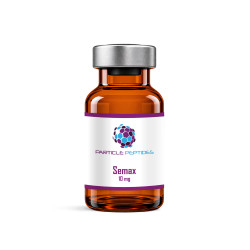
Semax 10mg
- In stock