
- today

Peptides for muscle growth include various peptide molecules studied in relation to muscle physiology, regeneration, metabolism, and growth hormone regulation. However, individual peptides differ in their structure, mechanism of action, and the extent of available scientific evidence.
Molecules being studied include, for example, Ipamorelin, Hexarelin, GHRP-2, GHRP-6, CJC-1295 no DAC, CJC-1295 + DAC, and Tesamorelin. Some act through the growth hormone secretagogue receptor, while others are analogues of growth hormone-releasing hormone (GHRH).
Research therefore focuses not only on muscle tissue itself, but also on GH secretion, IGF-1 levels, body composition, regeneration, and metabolic processes that may be related to muscle physiology.
How Are Peptides Related to Muscle Growth?
When discussing muscle growth and recovery, peptides for muscles are often mentioned as well. Their relevance in research, however, does not lie in one shared effect, but rather in their ability to influence different processes associated with muscle tissue.
For some peptides, research focuses primarily on growth hormone regulation and subsequent signalling through IGF-1. Others are studied in relation to tissue regeneration, metabolism, body composition, or the preservation of lean body mass.
These different mechanisms of action are precisely why all peptides cannot be evaluated in the same way. When assessing their potential relationship with muscle growth, it is therefore important to consider the specific molecule, the biological pathway it influences, and the level of available scientific evidence.
For peptides studied in connection with muscle physiology, research often focuses primarily on:
- growth hormone (GH) secretion,
- IGF-1 signalling,
- GHRH signalling,
- the ghrelin receptor GHS-R1a,
- tissue synthesis and repair,
- changes in body composition,
- adipose tissue metabolism,
- regeneration,
- preservation or changes in lean body mass.
For this reason, peptides for muscle growth are more accurately understood as a group of different molecules whose possible relationships with muscle tissue are studied through different biological mechanisms.
If you are interested in what peptides are, how they function in the body, and why they are the subject of scientific research, you can find a broader overview in our article: Peptides: What They Are, How They Work, and Why They Are the Subject of Scientific Research.
Peptides and Growth Hormone: What Is the Relationship?
A large proportion of peptides associated with muscle research are related to the growth hormone axis.
Growth hormone, abbreviated as GH, is a hormone produced by the pituitary gland. Its secretion is naturally regulated by several signals, including GHRH and somatostatin. The ghrelin receptor also plays a role in this regulation.
Some peptides under investigation are able to interact with these regulatory systems.
In simplified terms, they can be divided into two major groups.
Peptides Acting Through the GHS-R1a Receptor
This area of research includes, for example:
- Ipamorelin,
- Hexarelin,
- GHRP-2,
- GHRP-6.
These are growth hormone secretagogues studied primarily in relation to their ability to stimulate GH release.
Peptides Associated With GHRH Signalling
These include, for example:
- CJC-1295 no DAC (Mod GRF 1-29),
- CJC-1295 + DAC,
- Tesamorelin.
These molecules are related to growth hormone-releasing hormone and are studied in connection with stimulation of the natural GH axis.
When discussing peptides and growth hormone, it is important to distinguish between the individual groups and their mechanisms of action. Some peptides activate the growth hormone secretagogue receptor, while others act through GHRH receptors.
When evaluating research, the specific molecule, its mechanism of action, and the quality of available scientific data therefore matter.
Which Peptides for Muscle Growth Are Being Studied?
The following peptides are among the molecules frequently appearing in research on the GH axis, body composition, and processes associated with muscle tissue.
Ipamorelin
Ipamorelin is a synthetic pentapeptide belonging to the group of growth hormone secretagogues. It activates the growth hormone secretagogue receptor and is studied for its ability to stimulate GH release.
One characteristic that distinguishes it from some older secretagogues is its relative selectivity. In experimental studies, it has been described as a molecule capable of stimulating GH without the same degree of ACTH and cortisol stimulation that may accompany certain other compounds in this group.
Research into Ipamorelin therefore concerns more than growth hormone secretion alone. Downstream processes associated with IGF-1, bone metabolism, body composition, and muscle physiology are also being investigated.
Peptides such as Ipamorelin are among the molecules frequently discussed in relation to the GH axis and its possible connection with muscle tissue.
However, it is important to distinguish between a mechanism observed in research and a claim about a specific outcome in humans.
If you would like to learn more about Ipamorelin, its mechanism of action, and its selectivity, read our dedicated article: Ipamorelin: A Scientific Perspective on a Selective Growth Hormone Secretagogue.

Hexarelin
Hexarelin, also known as Examorelin, is a synthetic hexapeptide and an agonist of the growth hormone secretagogue receptor.
Like other molecules from the GHRP group, it mimics part of the signalling of the natural hormone ghrelin and may stimulate GH release.
Hexarelin is being studied in several areas. In addition to GH and neuroendocrine signalling, its potential cardiovascular and cardioprotective mechanisms have also been investigated in experimental models.
In the area of body composition, it is of particular interest because of the relationship between GH-axis stimulation, adipose tissue metabolism, and preservation of lean body mass.
However, not all observed mechanisms have the same level of clinical evidence, and findings from experimental models cannot automatically be extrapolated to humans.
A more detailed overview of Hexarelin, its mechanism of action, and available research findings can be found in our article: Hexarelin: Effects, Mechanism of Action, and Findings From Scientific Studies.

GHRP-2
GHRP-2, also known as pralmorelin, belongs to the group of synthetic peptides that stimulate growth hormone secretion.
It is an agonist of the ghrelin receptor GHS-R1a. Activation of this receptor may promote GH release from the pituitary gland.
GHRP-2 is therefore studied in relation to:
- growth hormone secretion,
- hormonal signalling,
- appetite regulation,
- body composition,
- metabolic processes,
- regeneration and muscle physiology.
Its relationship with the ghrelin system is also important because ghrelin is involved not only in GH regulation, but also in mechanisms associated with hunger and energy homeostasis.
When assessing peptides for muscle growth, it is therefore not sufficient to focus on a single outcome. The same receptor system may influence several biological processes simultaneously.

GHRP-6
GHRP-6 is a synthetic hexapeptide whose name is derived from Growth Hormone-Releasing Peptide 6.
Like GHRP-2, it activates the ghrelin receptor and stimulates the natural release of growth hormone from the anterior pituitary gland.
However, research on GHRP-6 is not limited to GH. Various experimental models have investigated processes related to:
- tissue regeneration,
- cell survival,
- cardiovascular physiology,
- neuroprotection,
- metabolism,
- hormonal regulation.
GHRP-6 also demonstrates why the term peptides for muscles is highly simplified. A single molecule may interact with several regulatory systems, and its biological profile may be considerably broader than one popular category of use.
A comparison of both molecules, their mechanisms, and differences in research findings can be found in the article: GHRP-2 vs. GHRP-6: What Research Reveals About Two Classic GH Secretagogues.

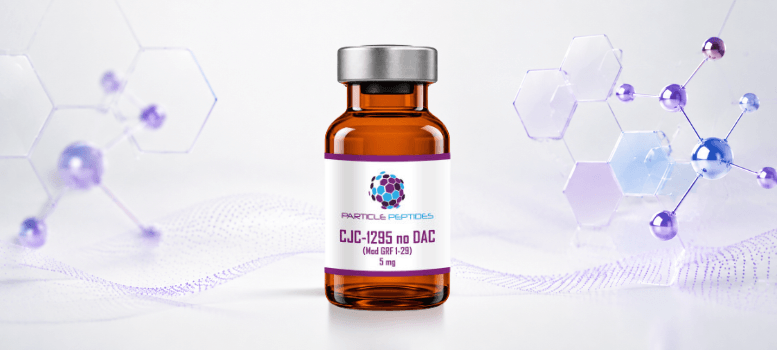
CJC-1295 no DAC – Mod GRF 1-29
CJC-1295 no DAC, often also referred to as Mod GRF 1-29, belongs to the group of synthetic analogues of growth hormone-releasing hormone.
Unlike GHRP peptides, it does not primarily act through the ghrelin receptor. Its research is associated with the GHRH receptor and subsequent stimulation of GH secretion.
Mod GRF 1-29 was developed by modifying a shorter active portion of natural GHRH in order to increase molecular stability.
Research investigates its relationship with:
- GH signalling,
- IGF-1,
- body composition,
- metabolism,
- tissue regeneration,
- bone and muscle physiology.
The difference between Mod GRF 1-29 and CJC-1295 + DAC is particularly significant from a pharmacokinetic perspective.
CJC-1295 + DAC
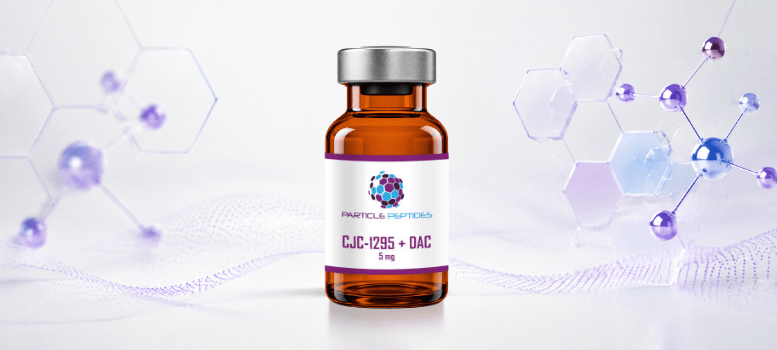
CJC-1295 + DAC is a modified synthetic GHRH analogue equipped with DAC technology – Drug Affinity Complex.
DAC enables the molecule to bind to albumin, significantly altering its pharmacokinetic profile and prolonging its presence in circulation compared with shorter GHRH analogues.
CJC-1295 is studied for its ability to influence GH levels and subsequently IGF-1.
The GH/IGF-1 axis is one of the reasons why CJC-1295 appears in research on body composition, metabolism, and processes related to muscle and bone tissue.
However, it should be emphasised that CJC-1295 + DAC and CJC-1295 no DAC are not pharmacokinetically identical molecules and should not automatically be treated as interchangeable.
If you are interested in how CJC-1295 with and without DAC differ in terms of biological half-life, mechanism of action, and endocrine response, read more in the article: CJC-1295 With DAC vs. Without DAC: Differences in Pharmacokinetics, Mechanism of Action, and Endocrine Response.
Tesamorelin
Tesamorelin is a synthetic analogue of GHRH, or growth hormone-releasing hormone. It binds to GHRH receptors in the pituitary gland and stimulates the physiological secretion of endogenous GH, which subsequently also leads to increased IGF-1 levels.
Among the molecules listed above, Tesamorelin is particularly interesting because clinical data regarding its effects on body composition are available.
Research has focused extensively on people with HIV-associated lipodystrophy. Randomised clinical trials and subsequent analyses primarily evaluated changes in visceral adipose tissue, IGF-1, and body composition.
Some analyses also observed changes in lean body mass and muscle tissue parameters. These findings are scientifically relevant when investigating the relationship between GHRH, the GH/IGF-1 axis, and muscle physiology, but they cannot automatically be interpreted as evidence of a universal muscle-growth effect of Tesamorelin in healthy individuals.
Tesamorelin is also an example of why the term peptides for muscle growth must be interpreted in the context of a specific population and a specific clinical or experimental model.
Does Higher Growth Hormone Automatically Mean Muscle Growth?
No. An increase in growth hormone levels alone does not automatically result in a predictable increase in muscle mass.
Growth hormone performs a wide range of functions in the body. It influences metabolism, lipolysis, IGF-1 signalling, bone tissue, and other physiological processes. Its effects therefore cannot be reduced simply to muscle growth.
When evaluating peptides that influence GH secretion, it is important to consider the specific molecule, its mechanism of action, and the findings of available scientific studies.
The outcome depends on many factors, including:
- the specific molecule,
- the mechanism of action,
- the population being studied,
- the experimental model,
- the duration of the study,
- the hormonal environment,
- metabolic status,
- the methods used to assess body composition.
For this reason, peptides for muscle growth should be evaluated according to scientific data available for each specific peptide, rather than according to general claims found online.
Peptides and Their Side Effects: Why Do They Depend on the Specific Molecule?
There is no single universal answer here either. Peptides represent a very broad group of molecules. Ipamorelin, GHRP-6, and Tesamorelin, for example, are not identical substances, and their biological activity may differ.
Potential adverse effects therefore depend on the specific molecule, its mechanism, and the context in which it has been studied.
For substances affecting the GH/IGF-1 axis, scientific literature monitors changes in metabolic and hormonal parameters, among other factors. In clinical studies of Tesamorelin, reported effects have included injection-site reactions and symptoms associated with growth hormone activity.
The fact that a particular molecule is a peptide therefore does not automatically mean it has the same safety profile as another peptide.
Peptides and Their Effects: Why Is It Important to Consider the Mechanism?
When discussing peptides and their effects, it is important to start with the specific molecule and its mechanism of action. Individual peptides may influence different biological processes, which means there is no single universal list of effects applicable to all peptides.
Each peptide should be evaluated according to at least three questions:
- Which receptor or biological system does it act on?
- In what model was the effect observed?
- What level of evidence is available?
An outcome observed in a cell culture may not be the same as an outcome observed in an animal study. Likewise, findings from animal models cannot automatically be considered clinically confirmed effects in humans.
Similarly, results obtained in a precisely defined patient population cannot be extrapolated to a healthy population without additional data.
Research Peptide Quality: What Should You Consider Beyond Price?
When selecting research peptides, price should not be the only deciding factor. More important considerations include material quality, the extent of testing, and supplier transparency.
Even when comparing peptide prices, it is therefore appropriate to look beyond the amount of product stated on the label.
When evaluating a research peptide, factors to consider include:
- molecular identity,
- purity,
- actual peptide content,
- endotoxin levels,
- presence of heavy metals,
- microbial contamination,
- manufacturing process,
- batch-to-batch consistency,
- traceability of the specific batch,
- authenticity of analytical documentation.
Declared HPLC purity alone therefore does not provide a complete picture of the quality of research material.
At Particle Peptides, quality is not assessed solely by purity percentage. Every batch undergoes independent laboratory testing across multiple parameters, and analytical documentation is available for individual batches.
Even when research peptides are sold strictly for research purposes, manufacturing control, the scope of testing, batch traceability, and supplier transparency should therefore play an important role. These factors provide a much more complete picture of product quality than price alone.
What Should You Look for When Choosing Peptides in the EU?
When choosing peptides in the EU, supplier transparency and the ability to verify the origin and quality of a specific batch are particularly important.
Particle Peptides positions itself as a European supplier of research peptides with an emphasis on:
- manufacturing on GMP production lines,
- independent laboratory testing,
- batch-specific COAs,
- identity and purity verification,
- verification of actual peptide content,
- endotoxin testing,
- heavy metal testing,
- microbiological testing,
- batch traceability.
With research materials, there is an important difference between claimed quality and quality that can be analytically demonstrated.
Are Peptides for Muscle Growth the Same as Steroids?
No. Peptides and anabolic steroids are chemically and biologically different groups of molecules.
Peptides consist of chains of amino acids. Steroids have a characteristic steroid ring structure, and their mechanisms of action are different.
For example, Ipamorelin or GHRP-2 are studied primarily in relation to receptor signalling and growth hormone secretion. This is a different mechanism from the action of anabolic-androgenic steroids on the androgen receptor.
These two categories should therefore not be confused.

Which Peptides for Muscle Growth Are the Most Interesting From a Research Perspective?
There is no single universal winner. Individual molecules represent different research approaches.
Ipamorelin, Hexarelin, GHRP-2, and GHRP-6 are particularly interesting from the perspective of growth hormone secretagogue receptor activation.
CJC-1295 no DAC and CJC-1295 + DAC allow researchers to investigate GHRH signalling and the impact of different pharmacokinetic profiles.
Tesamorelin additionally has clinical data relating to the GH/IGF-1 axis and body composition in precisely defined populations.
This means that the selection of an appropriate molecule for research depends primarily on the research question.
Frequently Asked Questions
What Are Peptides for Muscle Growth?
This is primarily a popular search term referring to various peptide molecules studied in relation to muscle physiology, the GH/IGF-1 axis, regeneration, and body composition. It is not a single scientifically defined category of peptides.
Which Peptides Are Related to Growth Hormone?
Molecules under investigation include Ipamorelin, Hexarelin, GHRP-2, and GHRP-6, which are associated with the growth hormone secretagogue receptor. Mod GRF 1-29, CJC-1295 + DAC, and Tesamorelin are studied primarily in relation to GHRH signalling.
What Is the Difference Between GHRP and CJC-1295?
GHRP peptides, such as GHRP-2 and GHRP-6, stimulate growth hormone secretion primarily through activation of the ghrelin receptor GHS-R1a.
CJC-1295, in contrast, is a GHRH analogue and acts primarily through the GHRH receptor in the pituitary gland.
Both groups are therefore related to growth hormone regulation, but they use different receptor mechanisms.
Do Peptides Automatically Cause Muscle Growth?
No. The term “peptides for muscle growth” is a simplified label. The fact that a particular peptide influences GH or IGF-1 does not in itself prove a specific increase in muscle mass.
Results must be interpreted according to the specific molecule, the study population, and the quality of available scientific data.
Do All Peptides Have the Same Side Effects?
No. The safety profile depends on the specific peptide, its mechanism, and the context in which it has been studied.
Peptides cannot be evaluated as one homogeneous group in terms of potential adverse effects.
Conclusion
The topic of peptides for muscle growth encompasses far more than a single group of substances intended for one purpose.
From a scientific perspective, these are different molecules studied in the context of the GH/IGF-1 axis, ghrelin and GHRH signalling, metabolism, body composition, regeneration, and muscle physiology.
Ipamorelin, Hexarelin, GHRP-2, GHRP-6, CJC-1295 no DAC, CJC-1295 + DAC, and Tesamorelin are not identical peptides. Each has its own structure, pharmacological properties, mechanism, and level of scientific evidence.
When evaluating peptides, it is therefore not enough to ask: “Which peptide is for muscles?”
A more scientifically precise question is: Which specific peptide are we studying, through which mechanism does it act, and what do the available data actually show about that mechanism?
This approach makes it possible to distinguish scientific research from marketing shortcuts and generalised claims.
Sources
- Particle Peptides Overview – internal expert documentation of Particle Peptides.
- Particle Peptides – Brand Positioning & Marketing Guidelines (2026).
- Stanley T. L. et al. Effects of a Growth Hormone-Releasing Factor Analog on Body Composition and Related Metabolic Parameters.
- Feldman B. J. et al. The Growth Hormone-Releasing Hormone Analogue, Tesamorelin, Decreases Muscle Fat and Increases Muscle Area in Adults with HIV.
- Current systematic reviews and randomized controlled trials of Tesamorelin evaluating body composition, visceral adipose tissue, lean body mass, and IGF-1.
Research Quality Begins with Peptide Quality
At Particle Peptides, we believe that reliable research begins with reliable materials. That is why our research peptides are manufactured on cGMP-compliant production lines by a global pharmaceutical CDMO, and every batch undergoes independent third-party testing for:
- Purity
- Identity confirmation
- Peptide content
- Endotoxin levels
- Heavy metals (Class I & II)
- Microbial contamination (TAMC & TYMC)
Transparency and independently verified laboratory data form the foundation of high-quality scientific research.
Disclaimer: All Particle Peptides products are intended exclusively for scientific research and laboratory use. They are not intended for human or veterinary use, nor for the diagnosis, treatment, cure, or prevention of any disease.
Related products

GHRP-2 5mg
- In stock
GHRP-6 5mg
- In stock
Hexarelin 5mg
- In stock

Ipamorelin 5mg
- In stock