- today

Peptides for tissue regeneration include various peptide molecules investigated for their roles in damaged tissue repair, cell migration, angiogenesis, extracellular matrix remodeling, and other biological processes. However, regeneration is not a single, isolated event. It involves complex interactions between cells, blood vessels, growth factors, structural proteins, and hormonal signaling pathways.
Peptides studied in this field include BPC-157, Thymosin Beta-4 (TB-500), Ipamorelin, Hexarelin, GHRP-2, GHRP-6, CJC-1295 no DAC (Mod GRF 1-29), CJC-1295 + DAC, and Tesamorelin. However, these molecules operate through different mechanisms. While research on BPC-157 and Thymosin Beta-4 (TB-500) focuses directly on tissue repair mechanisms, another group of peptides is investigated primarily for its role in growth hormone regulation and the GH/IGF-1 axis.
If you would like a broader explanation of what peptides are, how they work, and why they are studied across different areas of biology, read our article: Peptides: What Are They, How Do They Work, and Why Are They Studied in Scientific Research?
How Does Tissue Regeneration Work?
The repair of damaged tissue is a complex biological process. Following an injury, numerous mechanisms are gradually activated to remove damaged cells, generate new tissue, and subsequently remodel its structure.
Research into tissue regeneration primarily focuses on:
-
Inflammatory signaling
-
Cell migration and proliferation
-
Angiogenesis
-
Formation of new blood vessels
-
Fibroblast activity
-
Collagen synthesis
-
Extracellular matrix
-
Cell differentiation
-
Growth factor activity
-
Remodeling of newly formed tissue
The different stages of this process help explain why peptides investigated for tissue regeneration cannot all be evaluated in the same way.
Which Peptides Are Being Studied for Tissue Regeneration?
From a mechanistic perspective, these peptides can be divided into several groups.
BPC-157 and Thymosin Beta-4 (TB-500) are primarily studied in relation to cell migration, angiogenesis, wound healing, and damaged tissue remodeling.
Ipamorelin, Hexarelin, GHRP-2, and GHRP-6 belong to a group of peptides investigated for their interaction with the growth hormone secretagogue receptor and their ability to stimulate growth hormone (GH) secretion.
CJC-1295 no DAC (Mod GRF 1-29), CJC-1295 + DAC, and Tesamorelin are associated with GHRH signaling and regulation of the growth hormone and IGF-1 axis.
Each group therefore represents a different approach to investigating the biological processes involved in tissue regeneration.
BPC-157: Research into Soft Tissue and Connective Tissue Repair
BPC-157 is a synthetic pentadecapeptide consisting of 15 amino acids. It is derived from a sequence associated with the Body Protective Compound protein, and research on this peptide focuses extensively on processes involved in tissue healing and protection.
BPC-157 is primarily investigated in relation to:
-
Tendons and ligaments
-
Muscle tissue
-
Skin tissue
-
The vascular system
-
The gastrointestinal tract
-
Nervous tissue
-
Angiogenesis and vascular responses
One particularly interesting area of research is its relationship with the formation of new blood vessels and blood supply to damaged tissues. Regenerating tissue requires an adequate supply of oxygen, nutrients, and cells involved in the repair process, making angiogenesis an important aspect of BPC-157 research.
Research also examines collagen organization and mechanisms that may influence the repair of tendons, ligaments, and other structures of the musculoskeletal system. However, the available clinical evidence for BPC-157 remains considerably more limited than the experimental literature.
If you would like to learn more about BPC-157, its mechanisms, tissue regeneration research, and the areas in which this molecule is being investigated, read our dedicated article: BPC-157: Why Is It One of the Most Interesting Peptides in Regeneration Research?
Thymosin Beta-4 (TB-500): Cell Migration and Tissue Regeneration
Thymosin Beta-4 (Tβ4), also referred to as TB-500 in some research peptide contexts, is a peptide consisting of 43 amino acids. Its biological mechanism is closely associated with actin, one of the fundamental components of the cellular cytoskeleton.
Actin plays an essential role in cell movement. During tissue repair, cells involved in regeneration must migrate toward the damaged area and subsequently participate in the formation and organization of new tissue.
Research on Thymosin Beta-4 (TB-500) therefore focuses primarily on cell migration, angiogenesis, cell differentiation, inflammatory signaling, and tissue remodeling. Tβ4 is also released from platelets at sites of injury, and its mechanisms are connected with several aspects of the body's natural repair response.
Thymosin Beta-4 has also been investigated in clinical research on dermal wound healing, making it an interesting molecule in the field of tissue regeneration research.
BPC-157 + TB-500 Blend: Combined Research into Regenerative Mechanisms
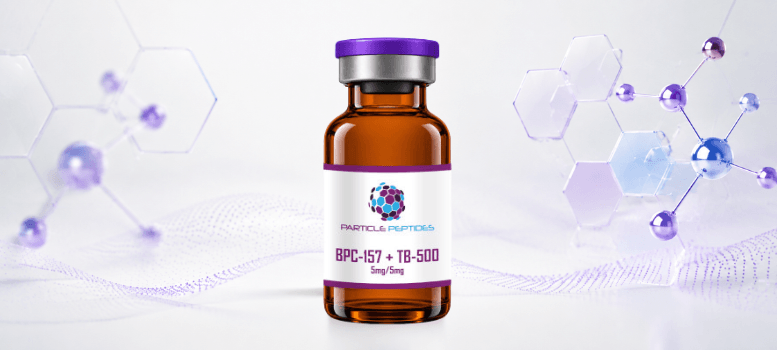
The BPC-157 + TB-500 Blend combines two synthetic research peptides investigated for their relationships with tissue regeneration, cell migration, angiogenesis, and the repair of damaged structures.
BPC-157 is primarily studied in connection with healing processes, vascular responses, angiogenesis, and the remodeling of soft and connective tissues. Thymosin Beta-4 (TB-500) is mainly associated with actin, cell migration, cell differentiation, modulation of inflammatory processes, and the formation of new blood vessels.
The combination of these two peptides therefore represents an interesting research model for examining interactions between multiple mechanisms involved in tissue regeneration and repair. Their different yet partially complementary research profiles make BPC-157 and Thymosin Beta-4 (TB-500) relevant subjects of investigation within the field of regenerative peptides.
If you would like to explore the BPC-157 and Thymosin Beta-4 (TB-500) combination in greater detail, including its mechanisms and research related to tissue repair, read our dedicated article: BPC-157 + Thymosin Beta-4 (TB-500): Why Is This Combination Among the Most Extensively Studied in Tissue Regeneration Research?
Peptides for Tissue Regeneration and Growth Hormone: What Is the Connection?
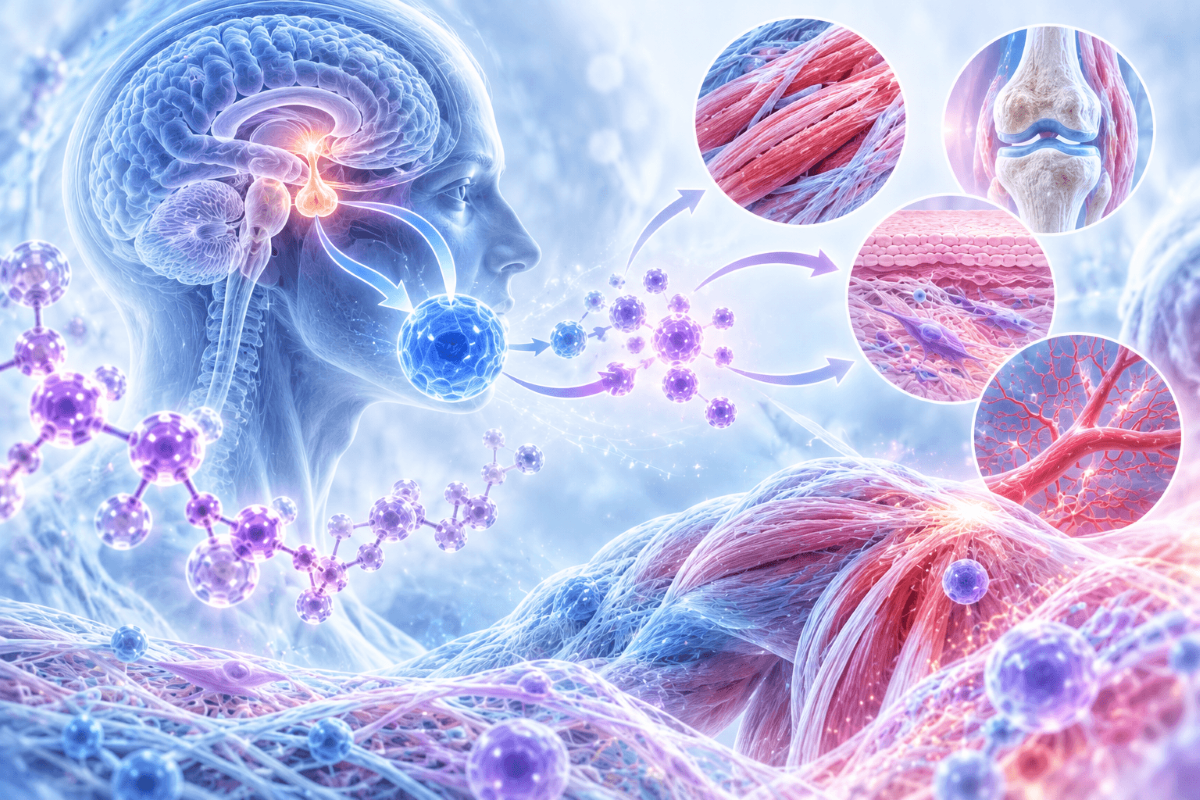
Another important group consists of peptides that influence the GH/IGF-1 axis.
Growth hormone (GH) is produced by the pituitary gland, and its biological activity is closely linked to insulin-like growth factor 1 (IGF-1). This hormonal axis is involved in protein metabolism, muscle and bone physiology, energy metabolism, and processes associated with tissue maintenance and repair.
Some peptides investigated for tissue regeneration therefore do not participate directly in wound healing in the same way as BPC-157 or Thymosin Beta-4. Instead, their research significance lies primarily in the regulation of signaling pathways associated with GH and IGF-1.
Ipamorelin: A Selective Growth Hormone Secretagogue
Ipamorelin is a synthetic pentapeptide belonging to the group of growth hormone secretagogues. It activates the growth hormone secretagogue receptor and stimulates GH release.
One of its most distinctive characteristics is its selectivity. In early pharmacological research, Ipamorelin stimulated GH secretion without producing the same pronounced increases in ACTH and cortisol observed with certain earlier GHRP peptides.
From the perspective of regeneration, Ipamorelin is particularly interesting through its relationship with the GH/IGF-1 axis. Research into this hormonal pathway includes protein metabolism, muscle tissue, bone metabolism, and other processes associated with tissue repair and adaptation.
Hexarelin: GH Signaling and Cardiovascular Research
Hexarelin, also known as Examorelin, is a synthetic hexapeptide and an agonist of the growth hormone secretagogue receptor.
Like other peptides in this group, it stimulates GH secretion. However, its research profile is broader because Hexarelin is also being investigated in relation to cardiovascular mechanisms.
Studies have identified interactions between Hexarelin and GHSR, as well as additional receptor mechanisms in cardiac tissue. For this reason, Hexarelin research explores not only neuroendocrine processes but also cardiac function and mechanisms involved in cardiovascular tissue protection.
GHRP-2: Growth Hormone Stimulation Through GHS-R
GHRP-2, also known as Pralmorelin, is a synthetic hexapeptide belonging to the growth hormone-releasing peptide family.
Its primary research mechanism involves activation of the growth hormone secretagogue receptor (GHS-R1a). This receptor also serves as the receptor for the naturally occurring hormone ghrelin.
GHRP-2 is therefore studied primarily in relation to GH secretion, neuroendocrine signaling, and mechanisms regulated by the ghrelin receptor. Research into GHRPs and ghrelin demonstrates that these signaling systems are closely connected to the natural regulation of growth hormone.
In the context of regeneration, its significance is primarily associated with the hormonal environment and the GH/IGF-1 axis.
GHRP-6: The Ghrelin Receptor and GH Axis
GHRP-6 is another synthetic hexapeptide belonging to the growth hormone secretagogue family.
Like GHRP-2, it acts through a receptor system associated with ghrelin and stimulates the release of growth hormone from the pituitary gland.
However, the ghrelin receptor is relevant to more than GH regulation. It is also involved in energy metabolism, food intake, and several neuroendocrine processes. The research profile of GHRP-6 therefore extends beyond growth hormone stimulation alone.
In regeneration research, GHRP-6 is primarily categorized among molecules used to investigate the relationship between GH signaling, metabolism, and biological tissue repair.
CJC-1295 no DAC (Mod GRF 1-29): Research into GHRH Signaling
CJC-1295 no DAC, also known as Mod GRF 1-29, is a modified analogue of growth hormone-releasing hormone (GHRH).
Unlike Ipamorelin, GHRP-2, GHRP-6, or Hexarelin, it does not act primarily through the ghrelin receptor. Instead, it activates GHRH receptors in the pituitary gland, supporting physiological signaling that leads to growth hormone release.
Mod GRF 1-29 is therefore investigated primarily in relation to the GH/IGF-1 axis, muscle and bone tissue, metabolism, and processes associated with tissue repair and adaptation.
CJC-1295 + DAC: Prolonged Activity of a GHRH Analogue
CJC-1295 + DAC also belongs to the group of synthetic GHRH analogues but contains a modification known as the Drug Affinity Complex (DAC).
DAC enables the molecule to bind to albumin, significantly prolonging its biological activity. Pharmacokinetics is therefore one of the main differences between CJC-1295 no DAC and CJC-1295 + DAC.
Controlled clinical research on CJC-1295 demonstrated prolonged increases in both GH and IGF-1 levels, while also investigating its ability to preserve the pulsatile pattern of growth hormone secretion.
From the perspective of regenerative peptide research, CJC-1295 is particularly interesting as a tool for studying longer-lasting stimulation of the GH/IGF-1 axis.
Tesamorelin: A GHRH Analogue with Clinical Research
Tesamorelin is a synthetic GHRH analogue consisting of 44 amino acids. It activates GHRH receptors in the pituitary gland, stimulates endogenous growth hormone secretion, and subsequently influences IGF-1 levels.
Compared with several other molecules in this group, Tesamorelin has a more extensive clinical evidence base. Research has focused primarily on the GH/IGF-1 axis, metabolism, and body composition. Randomized clinical trials have demonstrated its effects on visceral adipose tissue and increases in IGF-1 levels.
A more recent meta-analysis of randomized trials also confirmed changes in body composition and increased lean body mass in the populations studied.
In regeneration research, Tesamorelin is particularly relevant through studies of GHRH, GH/IGF-1 signaling, metabolism, and muscle tissue physiology.
Two Main Research Pathways for Peptides in Tissue Regeneration
Two distinct research directions can be identified among these molecules.
The first includes BPC-157 and Thymosin Beta-4 (TB-500), which are investigated for mechanisms directly associated with damaged tissue repair, including cell migration, angiogenesis, extracellular matrix regulation, and remodeling.
The second includes Ipamorelin, Hexarelin, GHRP-2, GHRP-6, CJC-1295 no DAC, CJC-1295 + DAC, and Tesamorelin. Their research significance is primarily related to growth hormone regulation and subsequent GH/IGF-1 signaling.
This distinction helps explain why the term peptides for tissue regeneration includes molecules with substantially different biological mechanisms.
How Are GH, IGF-1, and Tissue Regeneration Connected?
Growth hormone does not act independently within the body. A significant proportion of its biological effects are associated with IGF-1 and other metabolic and growth-related signaling mechanisms.
The GH/IGF-1 axis is studied in connection with:
-
Protein metabolism
-
Muscle tissue
-
Bone metabolism
-
Energy metabolism
-
Body composition
-
Cell growth and differentiation
-
Tissue repair and adaptation
Peptides influencing this hormonal axis therefore also appear in research into regenerative processes, although their mechanisms differ from those of molecules acting directly on tissue healing.
Peptides for Tissue Regeneration: Why Does the Type of Tissue Matter?
The regeneration of skin, muscle, tendons, ligaments, nervous tissue, and cardiovascular tissue does not occur through identical biological mechanisms.
Tendons and ligaments depend heavily on collagen structure and extracellular matrix organization. Muscle tissue requires coordinated activity involving satellite cells, metabolic regulation, and hormonal signaling. In skin tissue, fibroblasts, keratinocytes, angiogenesis, and extracellular matrix formation play particularly important roles.
For this reason, no single universal peptide can represent every form of regeneration. The specific molecule, mechanism of action, and type of biological process being investigated are essential considerations.
Research Peptide Quality: Regeneration Research Is About More Than the Molecule's Name
In laboratory research, the quality of the materials used can significantly influence experimental results. An HPLC purity percentage alone therefore does not provide a complete picture of peptide quality.
Important parameters in research peptides include identity confirmation, actual peptide content, purity, endotoxin levels, heavy metals, microbial contamination, manufacturing standards, and batch traceability.
At Particle Peptides, products are manufactured by a global pharmaceutical CDMO on GMP production lines, and individual batches undergo independent third-party laboratory testing across multiple quality parameters. Batch-specific analytical documentation and full batch traceability are available.
Frequently Asked Questions About Peptides for Tissue Regeneration
What Are Peptides for Tissue Regeneration?
Peptides for tissue regeneration is a broad term referring to various peptide molecules investigated for their roles in tissue repair, cell migration, angiogenesis, extracellular matrix regulation, growth factors, and hormonal mechanisms relevant to regeneration.
Which Peptides Are Most Commonly Studied for Tissue Regeneration?
Molecules investigated in this field include BPC-157, Thymosin Beta-4 (TB-500), Ipamorelin, Hexarelin, GHRP-2, GHRP-6, CJC-1295 no DAC, CJC-1295 + DAC, and Tesamorelin. However, each peptide influences different biological mechanisms.
What Is BPC-157?
BPC-157 is a synthetic peptide consisting of 15 amino acids. Research focuses primarily on processes associated with soft and connective tissue healing, angiogenesis, vascular responses, and damaged tissue remodeling.
What Is Thymosin Beta-4 (TB-500)?
Thymosin Beta-4 (Tβ4), also referred to as TB-500, is a peptide consisting of 43 amino acids. It is studied primarily in relation to actin, cell migration, angiogenesis, cell differentiation, and damaged tissue regeneration.
Which Peptides Are Associated with Growth Hormone?
Ipamorelin, Hexarelin, GHRP-2, and GHRP-6 are growth hormone secretagogues primarily associated with the GHS-R1a receptor system. CJC-1295 no DAC, CJC-1295 + DAC, and Tesamorelin act through GHRH signaling.
What Is the Difference Between CJC-1295 no DAC and CJC-1295 + DAC?
Both molecules are associated with GHRH signaling but differ primarily in their pharmacokinetics. DAC enables CJC-1295 to bind to albumin, extending its biological half-life. CJC-1295 no DAC, also known as Mod GRF 1-29, has a different duration and activity profile.
Are All Peptides for Tissue Regeneration the Same?
No. BPC-157 and Thymosin Beta-4 (TB-500) are primarily investigated in the context of direct tissue repair mechanisms. Ipamorelin, Hexarelin, GHRP-2, GHRP-6, CJC-1295, and Tesamorelin are mainly associated with regulation of the GH/IGF-1 axis. Each molecule must therefore be evaluated individually.
Conclusion
Peptides for tissue regeneration represent a broad group of molecules that enable researchers to investigate multiple biological mechanisms involved in tissue repair and adaptation.
BPC-157 is primarily studied in relation to soft and connective tissue healing, angiogenesis, and vascular responses. Thymosin Beta-4 (TB-500) is associated with actin, cell migration, angiogenesis, and tissue remodeling.
Ipamorelin, Hexarelin, GHRP-2, and GHRP-6 represent a different research pathway based on the regulation of growth hormone secretion through the GHS-R receptor system. CJC-1295 no DAC, CJC-1295 + DAC, and Tesamorelin influence GH regulation through GHRH signaling.
These distinct mechanisms demonstrate that tissue regeneration research does not revolve around a single universal molecule or biological process. A more precise understanding requires consideration of the specific peptide, receptor pathway, tissue type, and biological process under investigation.
Sources:
-
Goldstein A.L. et al. Thymosin beta4: actin-sequestering protein moonlights to repair injured tissues.
-
Goldstein A.L. et al. Advances in the basic and clinical applications of thymosin β4.
-
Raun K. et al. Ipamorelin, the first selective growth hormone secretagogue.
-
Mao Y. et al. The cardiovascular action of hexarelin.
-
Ghigo E. et al. Novel mechanisms of growth hormone regulation: growth hormone-releasing peptides and ghrelin.
-
Teichman S.L. et al. Prolonged stimulation of growth hormone and IGF-I secretion by CJC-1295 in healthy adults.
-
Stanley T.L. et al. Metabolic effects of a growth hormone-releasing factor in obese subjects with reduced GH secretion.
-
Poolton J.T. et al. Human evidence for BPC-157 in orthopaedic and regenerative medicine: a systematic review of efficacy and safety.
Research Quality Begins with Peptide Quality
At Particle Peptides, we believe that reliable research begins with reliable materials. That is why our research peptides are manufactured on cGMP-compliant production lines by a global pharmaceutical CDMO, and every batch undergoes independent third-party testing for:
- Purity
- Identity confirmation
- Peptide content
- Endotoxin levels
- Heavy metals (Class I & II)
- Microbial contamination (TAMC & TYMC)
Transparency and independently verified laboratory data form the foundation of high-quality scientific research.
Disclaimer: All Particle Peptides products are intended exclusively for scientific research and laboratory use. They are not intended for human or veterinary use, nor for the diagnosis, treatment, cure, or prevention of any disease.