
- today
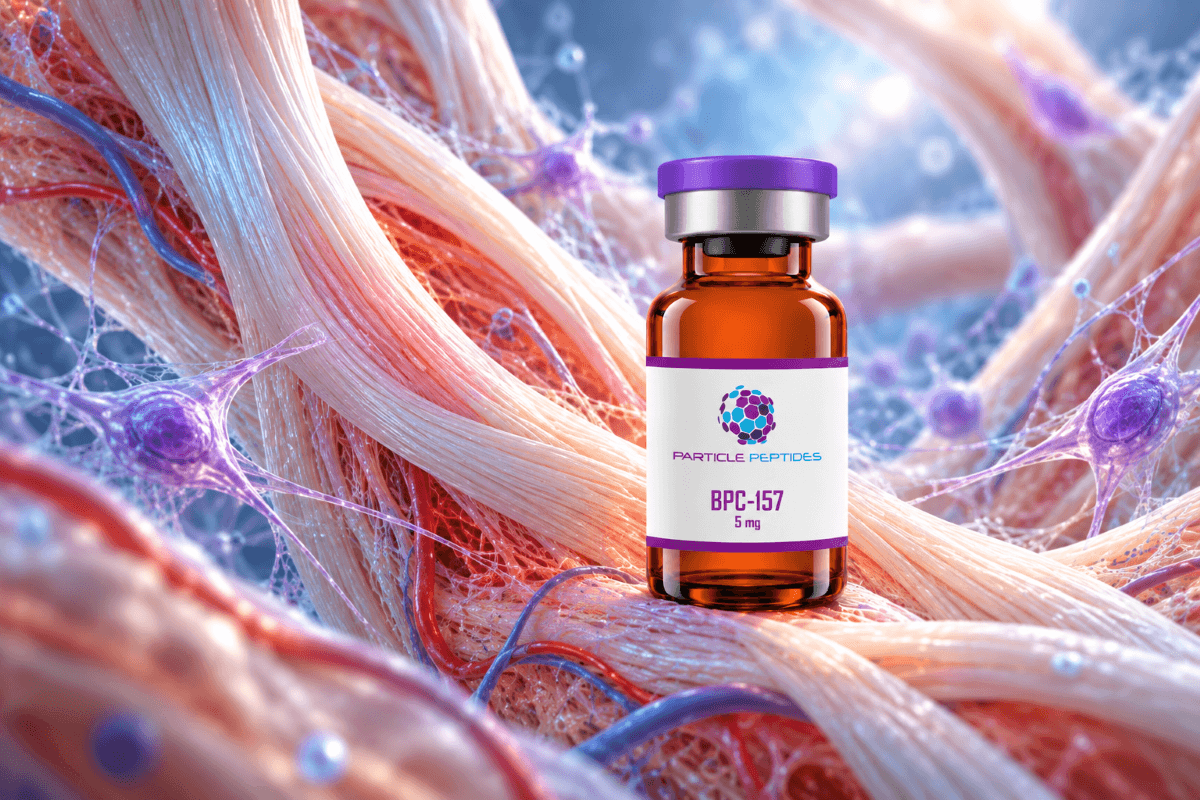
BPC-157 is one of the best-known research peptides associated with regeneration and the repair of damaged tissues. It has attracted scientific attention primarily because its effects are not being studied in only one type of tissue. Preclinical research focuses on tendons, muscles, ligaments, skin, the gastrointestinal tract, blood vessels, and the nervous system.
This broad research scope is exactly what makes BPC-157 an interesting subject in modern regenerative biology.
Rather than focusing on a single isolated mechanism, research into the BPC 157 peptide examines an entire network of processes - from cell movement and extracellular matrix formation to vascular response and tissue protection.
BPC-157 is a small peptide with a broad research scope
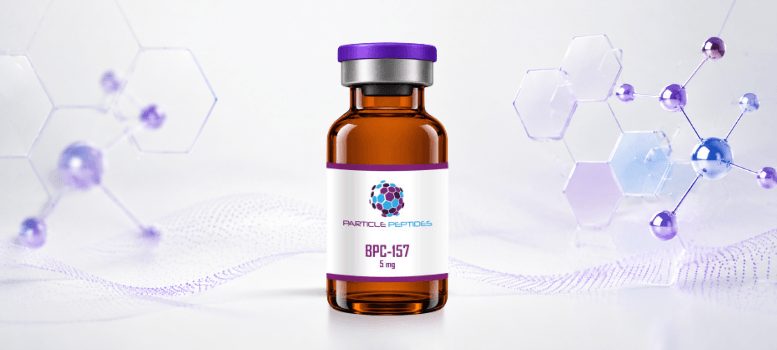
BPC-157 is a synthetic pentadecapeptide consisting of 15 amino acids, derived from a sequence associated with the Body Protection Compound protein.
Research into this molecule began mainly in the context of the gastric environment and the protective mechanisms of the gastrointestinal tract. Over time, however, scientific interest expanded to other biological systems.
Today, BPC-157 is studied, for example, in relation to:
-
fibroblast migration,
-
collagen formation and organization,
-
extracellular matrix,
-
angiogenesis,
-
endothelial signaling,
-
the nitric oxide system,
-
tissue response to injury,
-
oxidative stress,
-
soft tissue regeneration.
This is also one of the reasons why the BPC peptide remains an interesting experimental molecule despite having been studied for several decades.
Regeneration begins at the cellular level
When tissue is damaged, the body must initiate a series of precisely coordinated processes. Cells migrate into the damaged area, the local vascular environment changes, fibroblasts become activated, and remodeling of the extracellular matrix begins.
Fibroblasts are among the cells that have received considerable attention in BPC-157 research. Their role is essential. They produce collagen and other structural proteins while also needing to reach the area where tissue repair is taking place. Experimental studies with BPC-157 have therefore examined not only their number, but also their ability to migrate and the activity of signaling pathways that regulate this movement.
BPC-157 and cell movement
Cell migration may sound like a simple process, but from a biological perspective it is highly sophisticated. A cell must change its shape, create new contacts with its surroundings, and simultaneously reorganize its own cytoskeleton.
In research on BPC-157, proteins such as FAK and paxillin have been studied because of their role in regulating cellular movement. Research has also pointed to an association with F-actin, an important component of the cellular cytoskeleton.
This combination makes BPC-157 an interesting model for understanding how cells can move, organize themselves, and participate in tissue repair after injury.
Why is collagen so important in regeneration?
Collagen is one of the fundamental structural proteins of connective tissue. It is found in tendons, ligaments, skin, bones, and many other structures. After tissue injury, however, simply producing more collagen is not enough - its organization is equally important. Fibroblasts must create a new extracellular matrix in a way that allows damaged tissue to gradually remodel.
This is why the BPC 157 peptide is also studied in relation to fibroblasts, collagen production, and tissue remodeling. Researchers are therefore interested not only in whether new structural material is formed, but also in how this material is organized into a functional structure.
Blood vessels determine the conditions for regeneration
Every regenerating tissue requires an adequate supply of oxygen and nutrients. Without functional microcirculation, the possibilities for tissue repair are naturally limited, which is why vascular response represents another important area of BPC-157 research. Experimental studies have examined its association with endothelial cells, VEGFR2 signaling, and the nitric oxide system.
Another particularly interesting area is the formation and activation of collateral blood vessels. These can be compared, in simplified terms, to alternative routes in a road network - if the main route is damaged or blocked, the body may use other vascular connections to maintain blood flow. Research on BPC-157 has therefore provided interesting insights not only into the tissue itself, but also into its vascular environment.
Why is BPC-157 so often associated with tendons and ligaments?
Tendons and ligaments are tissues with relatively limited blood supply. This is one reason why their regeneration is biologically challenging and represents an interesting model for experimental research.
In preclinical studies of BPC-157, researchers have examined fibroblast migration, collagen formation, vascular response, and mechanisms of cellular signaling. Tendon fibroblasts have also allowed researchers to investigate the FAK-paxillin pathways, F-actin reorganization, and other processes necessary for cell movement in greater detail.
It is precisely this interaction between multiple mechanisms that explains why BPC-157 is so frequently studied in the context of soft tissues.
BPC-157 is not only a topic in muscle and tendon research
Historically, this peptide has also been closely associated with the gastrointestinal tract. Experimental models have examined mucosal barrier integrity, responses to damage in the stomach and intestines, oxidative stress, and vascular mechanisms within the digestive system.
The scope of research later expanded to other areas. Preclinical studies have examined BPC-157 in the context of skin, the vascular system, nervous tissue, and various experimental forms of tissue injury.
As a result, the BPC peptide has become an interesting model for studying whether different types of tissue may share common regenerative mechanisms.
The common denominator: coordination of regeneration
The most interesting perspective on BPC-157 may not come from observing one specific effect. It comes from looking at all of these processes together.
Regeneration requires:
-
cells capable of migration,
-
a functional cytoskeleton,
-
fibroblasts,
-
a new extracellular matrix,
-
collagen,
-
functional vascular supply,
-
a controlled response to injury.
These mechanisms do not function in isolation. Together, they form one biological system.
This is precisely why BPC-157 is scientifically interesting - it allows researchers to investigate several parts of this network across different experimental models.
BPC-157 and TB-500: another direction of research
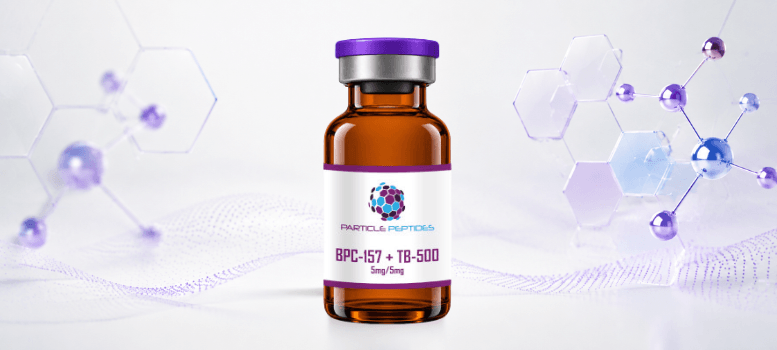
Interest in regenerative mechanisms naturally also leads to research into combinations of multiple peptides. One example is the BPC-157 + TB-500 Blend 5 mg / 5 mg with Mannitol.
BPC-157 is studied mainly in relation to fibroblasts, cell migration, vascular response, and other processes involved in tissue repair.
TB-500, a synthetic peptide based on biological mechanisms associated with Thymosin Beta-4, is studied in the context of actin, cell migration, angiogenesis, and regenerative processes. These different but partially complementary mechanisms help explain why this combination is of interest in experimental research.
We explore this topic in more detail in the article: BPC-157 + Thymosin Beta-4 (TB-500): Why Is This Combination Among the Most Extensively Studied in Tissue Regeneration Research?
What does further BPC-157 research show?
Research on BPC-157 has gradually moved from simple observations of regeneration toward more detailed studies of cellular signaling. Researchers are no longer interested only in the outcome of an experiment. They also aim to understand why it occurs.
This is why researchers examine, for example:
-
VEGFR2,
-
FAK,
-
paxillin,
-
F-actin,
-
nitric oxide,
-
fibroblasts,
-
endothelial cells,
-
oxidative stress.
This approach is gradually creating a more detailed picture of how BPC-157 may interact with biological processes associated with regeneration.
We discuss these individual pathways in greater detail in the article: BPC-157: Mechanisms of Action and Biological Signaling in Preclinical Research.
Further experimental findings on tendons, the nervous system, and the gastrointestinal tract can be found in the article: BPC-157: Scientific Perspective on Its Role in Tissue, Nerve and Intestinal Regeneration.
Why does BPC-157 remain one of the most discussed research peptides?
The answer lies mainly in the breadth of its research scope. It is not studied only in one isolated model or in a single type of cell.
Preclinical research on BPC-157 involves processes that are shared across several tissue types - including cell migration, extracellular matrix remodeling, vascular response, and cellular responses to injury.
This raises many further research questions. How do fibroblasts and endothelial cells communicate with each other? What role does the cytoskeleton play in the repair of damaged tissue? How does vascular signaling influence the regenerative environment? And can different tissues use similar biological mechanisms of repair?
Further research into the BPC 157 peptide may provide new answers to these questions.
Conclusion
BPC-157 has gained a significant place in regeneration research primarily because it is associated with several biological processes at the same time. From fibroblasts and cell migration to collagen, extracellular matrix, and vascular signaling, these are all areas that together form a complex system of tissue repair.
This complexity helps explain why BPC-157 remains a subject of continued scientific interest and why it is also included in research combinations such as BPC-157 + TB-500. Further research will continue to reveal how these individual mechanisms interact and what role BPC-157 may have in the study of regenerative processes.
BPC-157 and BPC-157 + TB-500 Blend are intended exclusively for scientific research and development purposes.
Sources:
-
Chang CH, Tsai WC, Lin MS, Hsu YH, Pang JHS. The promoting effect of pentadecapeptide BPC 157 on tendon healing involves tendon outgrowth, cell survival, and cell migration. Journal of Applied Physiology, 2011.
-
Chang CH, Tsai WC, Hsu YH, Pang JHS. Pentadecapeptide BPC 157 enhances the growth hormone receptor expression in tendon fibroblasts. Molecules, 2014.
-
Hsieh MJ et al. Therapeutic potential of pro-angiogenic BPC157 is associated with VEGFR2 activation and up-regulation. Journal of Molecular Medicine, 2017.
-
Seiwerth S, Rucman R, Turkovic B, et al. BPC 157 and blood vessels. Current Pharmaceutical Design, 2014.
-
Brcic L, Brcic I, Staresinic M, et al. Modulatory effect of gastric pentadecapeptide BPC 157 on angiogenesis in muscle and tendon healing. Journal of Physiology and Pharmacology, 2010.
-
Xue XC et al. Body protective compound-157 enhances alkali-burn wound healing in vivo and promotes proliferation, migration, and angiogenesis in vitro. Burns, 2015.
-
Sikiric P, Seiwerth S, Rucman R, et al. Stable gastric pentadecapeptide BPC 157: novel therapy in gastrointestinal tract. Current Pharmaceutical Design, 2011.
Research Quality Begins with Peptide Quality
At Particle Peptides, we believe that reliable research begins with reliable materials. That is why our research peptides are manufactured on cGMP-compliant production lines by a global pharmaceutical CDMO, and every batch undergoes independent third-party testing for:
- Purity
- Identity confirmation
- Peptide content
- Endotoxin levels
- Heavy metals (Class I & II)
- Microbial contamination (TAMC & TYMC)
Transparency and independently verified laboratory data form the foundation of high-quality scientific research.
Disclaimer: All Particle Peptides products are intended exclusively for scientific research and laboratory use. They are not intended for human or veterinary use, nor for the diagnosis, treatment, cure, or prevention of any disease.
Related products
BPC-157 + TB-500 Blend 5mg / 5mgwith Mannitol
- In stock
BPC-157 5mgwith Mannitol
- In stock