
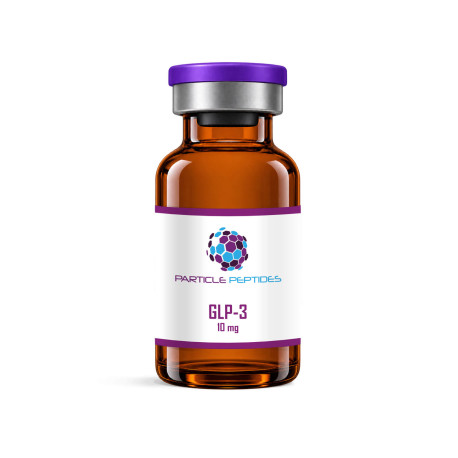
GLP-3 (LY3437943) is an innovative investigational peptide developed by Eli Lilly that functions as a triple agonist of the GLP-1, GIP, and GCG receptors—also referred to as a GGG triagonist. This combined receptor activation results in a synergistic effect on body weight reduction through increased energy expenditure, decreased food intake, delayed gastric emptying, and stimulation of lipolysis. Phase 2 clinical trials have demonstrated that GLP-3 can reduce body weight by up to 24.2% over a 48-week period, while also improving cardiometabolic parameters such as blood pressure, lipid profile, and insulin sensitivity. Promising outcomes observed in both preclinical and clinical populations position GLP-3 as one of the most promising candidates for the treatment of obesity and metabolic diseases, although further research remains necessary.
The product is intended for scientific research and development purposes only. Chemical substances shall not be used as a drug, medicine, active substance, medical aid, cosmetic product, a substance for production of a cosmetic product neither for human consumption that is any food or food supplement or otherwise similarly used on humans or animals. Intended only for in-vitro research, such as Receptor-ligand binding studies, Enzyme activity assays, Cell proliferation assays, Cell signaling assays, Epitope mapping, ect.
Peptides in lyophilized form are supplied in glass vials by standard shipping methods and do not require refrigeration. Short-term temperature fluctuations during transport will not reduce their quality and efficacy. Even at high summer temperatures, the peptides in lyophilized form are stable for several weeks.
Lyophilized peptides should be stored in a dry place, protected from light and moisture. The following storage conditions are generally recommended:
Before use, allow the vial to reach room temperature after taking it out of the refrigerator or freezer.
Once reconstituted, peptide solutions are generally less stable than their lyophilized form and should be stored under refrigerated conditions whenever possible.
The following storage conditions are generally recommended:
To preserve peptide integrity, avoid repeated freeze–thaw cycles, as these may accelerate peptide degradation.
Important: Most manufacturers recommend using reconstituted peptides within 4 weeks when stored at 2–8 °C. This recommendation is intentionally conservative and may not reflect the actual chemical stability of every peptide. In our own stability studies, Ipamorelin reconstituted in 0.9 percent sodium chloride showed no detectable degradation after 12 weeks of refrigerated storage. As peptide stability is highly sequence- and formulation-dependent, this result should not be extrapolated to other peptides without supporting stability data.
The shelf life of peptide solutions is limited. Freezing the aliquots will prolong the storage life of the peptide. What is globally accepted for peptides in solution is that they are generally stable for 3 or more weeks at +4°C and for 3-4 months at -20°C. Avoid repeated freeze-thaw cycles, as this can degrade the peptides.
GLP-3 is a synthetic peptide that acts as a triple agonist of the GCG-like peptide-1 (GLP-1), glucose-dependent insulinotropic polypeptide (GIP), and GCG receptors. This combinatorial receptor signaling enables simultaneous modulation of multiple metabolic pathways. In contrast to earlier GLP-1 receptor agonists, which primarily target appetite suppression and glycemic improvement, GLP-3 leverages GCG receptor activation to stimulate lipolysis and elevate basal metabolic rate, thereby contributing to a more pronounced and sustained reduction in adiposity as observed in research models.
The GLP-1 and GIP receptors play essential roles in augmenting insulin secretion and glucose homeostasis, whereas GCG receptor engagement elevates circulating GCG levels, promoting catabolic processes. Through this triagonist mechanism, GLP-3 has been observed in studies to reduce caloric intake and influence glycemic control while also affecting energy expenditure. This comprehensive modulation of energy balance represents a novel research strategy in the investigation of obesity, type 2 diabetes, and related metabolic disorders.
[1]
GLP-3 represents a novel generation of research compounds in the anti-obesity and antidiabetic field, characterized by its unique mechanism of action involving the simultaneous activation of three metabolically relevant receptors: the GCG-like peptide-1 receptor (GLP-1R), the glucose-dependent insulinotropic polypeptide receptor (GIPR), and the GCG receptor (GCGR). This triple agonism allows for an integrated modulation of key pathways regulating body weight and metabolic homeostasis. GLP-1 and GIP are incretin hormones that have been shown to influence insulin secretion, appetite, and glycemic control, while GCG primarily stimulates lipolysis, increases energy expenditure, and promotes fatty acid oxidation. As a synthetic peptide with an extended half-life, GLP-3 consolidates these effects into a once-weekly injectable formulation studied in clinical trials.
The activity of GLP-3 has been evaluated in several randomized phase 2 clinical trials, demonstrating significant weight reduction. After 48 weeks of treatment, participants receiving 8 mg and 12 mg doses experienced a mean body weight reduction of 22.8% and 24.2%, respectively—an outcome comparable to bariatric surgery. Additional observations included decreases in body mass index (BMI), waist circumference, fasting plasma glucose, HbA1c, and blood pressure. These effects were dose-dependent and particularly pronounced at higher doses. Notably, GLP-3 also exerted a substantial impact on hepatic steatosis, with liver fat volume reduced by up to 82.4% at 12 mg after 24 weeks. A considerable proportion of participants achieved a liver fat content below the threshold for steatosis (<5%), indicating research promise for metabolic liver diseases such as nonalcoholic steatohepatitis (NASH).
Given the high global prevalence of obesity and its strong association with type 2 diabetes and other chronic diseases, GLP-3 emerges as a highly promising research candidate. Ongoing phase 3 trials aim to further establish its long-term safety profile and observed activity. If positive, GLP-3 may be positioned as one of the most significant research innovations in the obesity field in recent decades.
[2] - [5]
Recent phase 2 clinical trial data evaluating the activity and safety of GLP-3 in subjects with type 2 diabetes demonstrate its pronounced effects on both glycemic control and body weight reduction. In one of the studies, patients with a mean baseline body mass index (BMI) of 35.3 kg/m² and an average HbA1c of 8.3% were randomized to receive varying doses of GLP-3 (ranging from 1 mg to 12 mg) or placebo over a 36-week study period. GLP-3 exhibited a clear dose-dependent reduction in HbA1c, with the highest dose (12 mg) achieving a mean HbA1c reduction of 2.16 percentage points from baseline, compared to only 0.43% in the placebo group—an effect that was statistically highly significant.
In addition to glycemic changes, a substantial reduction in body weight was also observed. Participants receiving the 12 mg dose of GLP-3 experienced a weight loss of up to 16.94%, corresponding to approximately 17.5 kg, while the placebo group showed a reduction of only 3.29%. The weight loss was consistent throughout the study period and showed a continued downward trend beyond week 36, suggesting a potential for sustained long-term activity. These findings highlight the dual observations with GLP-3 in subjects with type 2 diabetes, combining pronounced glucose-lowering effects with notable anti-obesity properties—particularly relevant given the strong association between obesity, insulin resistance, and impaired glycemic control.
GLP-3, as a triple agonist targeting GLP-1, GIP, and GCG receptors, holds significant promise as a research compound in the investigation of type 2 diabetes—not only through its observed influence on glycemic parameters but also via its substantial impact on weight reduction. Its activity in diabetic study populations approaches outcomes observed in individuals with obesity without diabetes, indicating its potential as a next-generation subject of investigation. These results may inform further research into more individualized approaches in subjects with diabetes and metabolic syndrome, especially in those with significant overweight or obesity.
[6], [7]
Metabolic dysfunction-associated steatotic liver disease (MASLD), formerly known as non-alcoholic fatty liver disease (NAFLD), is the most prevalent chronic liver disorder worldwide, with an increasing incidence driven by the global rise in obesity and metabolic syndrome. Pathophysiologically, MASLD is strongly associated with insulin resistance, leading to hepatic lipid accumulation, inflammation, and in advanced stages, fibrosis and cirrhosis.
GLP-3, a novel triple agonist of the GIP, GLP-1, and GCG receptors, has demonstrated significant hepatoprotective effects in research involving individuals with MASLD. In a phase 2 substudy that included participants with hepatic fat content ≥10%, 48-week administration of GLP-3 resulted in a robust, dose-dependent reduction in liver fat. At doses of 8 mg and 12 mg, participants achieved a mean relative reduction in hepatic fat content of 81.4% and 82.4%, respectively, at week 24 (versus +0.3% in the placebo group), with normalization of liver fat content (<5%) observed in 79% and 86% of participants. These effects were sustained at week 48, with 89% and 93% of participants maintaining hepatic fat levels below the steatosis threshold. Additionally, liver volume decreased significantly, and improvements were observed in biomarkers of hepatic injury and inflammation, suggesting potential antifibrotic and anti-inflammatory properties in these models.
The hepatic effects of GLP-3 are likely mediated by multiple mechanisms. Most prominently, the substantial reduction in total and visceral adiposity is tightly linked to improved insulin sensitivity—a core pathophysiological determinant of MASLD. Enhanced insulin action decreases the influx of free fatty acids to the liver and suppresses hepatic de novo lipogenesis. Moreover, administration of GLP-3 resulted in favorable changes in metabolic parameters including glycemia, lipid profile, and inflammatory markers. Given the current lack of approved research compounds for metabolic dysfunction-associated steatohepatitis (MASH)—the progressive form of MASLD characterized by hepatocellular injury and fibrosis—GLP-3 emerges as a highly promising research candidate. Its multifaceted mechanism of action, encompassing weight reduction, metabolic normalization, and marked hepatic fat clearance, underscores its potential role in the further investigation of metabolic liver diseases.
[4]

GLP-3 (LY3437943) is an innovative investigational peptide developed by Eli Lilly that functions as a triple agonist of the GLP-1, GIP, and GCG receptors—also referred to as a GGG triagonist. This combined receptor activation results in a synergistic effect on body weight reduction through increased energy expenditure, decreased food intake, delayed gastric emptying, and stimulation of lipolysis. Phase 2 clinical trials have demonstrated that GLP-3 can reduce body weight by up to 24.2% over a 48-week period, while also improving cardiometabolic parameters such as blood pressure, lipid profile, and insulin sensitivity. Promising outcomes observed in both preclinical and clinical populations position GLP-3 as one of the most promising candidates for the treatment of obesity and metabolic diseases, although further research remains necessary.