
- today
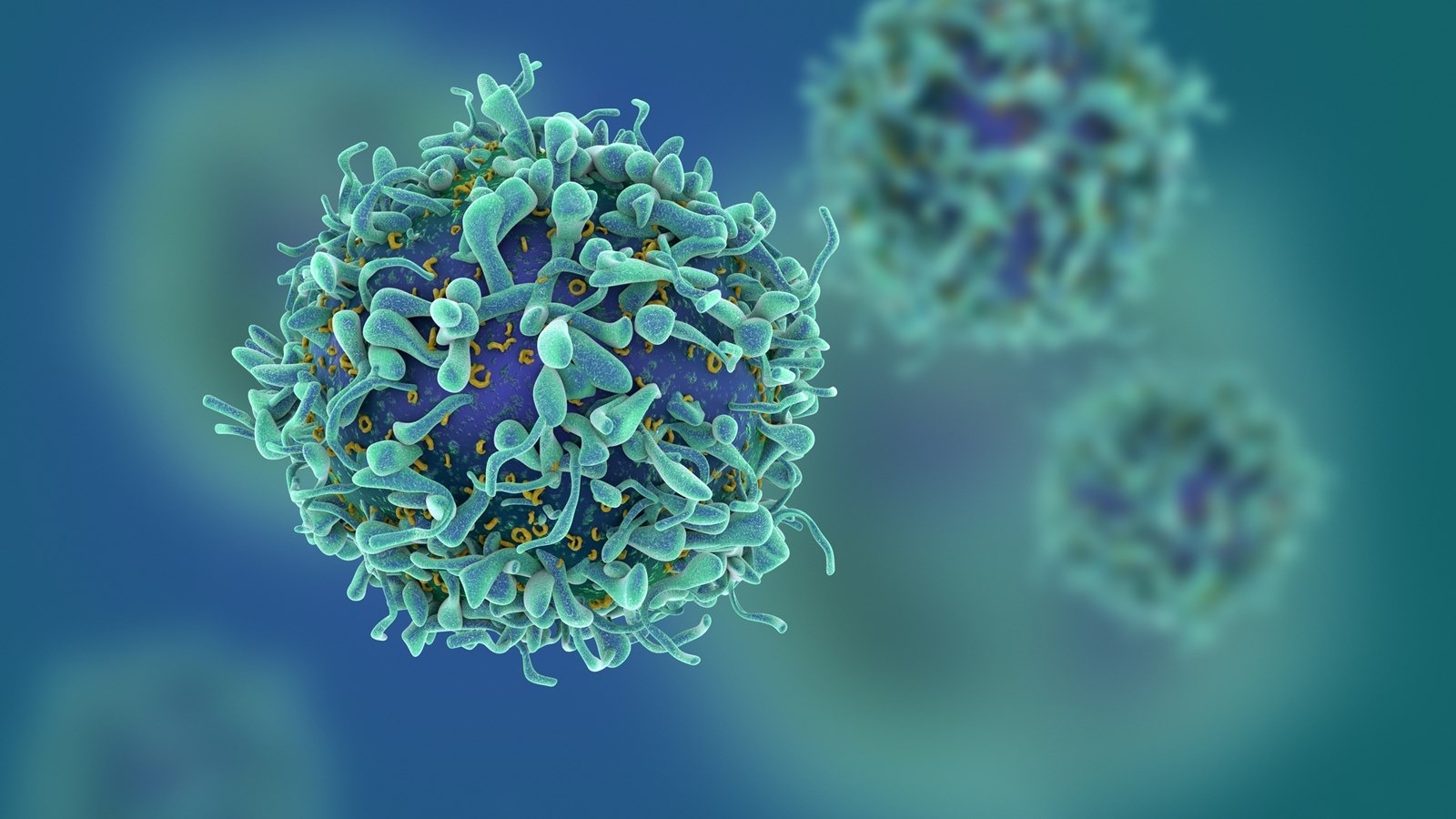
The immune system keeps T cells under control by regulating precisely when they can respond to a pathogen. For instance, helper T cells only turn “on” if other immune cells, such as antigen-presenting cells (APCs) present bacterial peptides (protein fragments) on their surface in a protein complex called MHC class II (MHC II).
However, not every bacterial peptide is immunodominant (gets loaded into MHC II and presented to T cells); nor is every peptide bound to this complex antigenic (capable of provoking an immune response). The rules that govern these dynamics are not yet fully known, muddling efforts to better understand the relationships between us as hosts, the pathogens that infect us, and our microbiomes.
To bring some clarity, a team led by Daniel Graham, Chengwei Luo, and core institute member Ramnik Xavier in the Broad’s Infectious Disease and Microbiome Program have developed a deep neural network-based algorithm called BOTA (Bacteria Originated T cell Antigen) capable of predicting, based on a bacterial genome data, peptides with the highest chance of triggering an immune response.
As they reported in Nature Medicine, Graham and the team (which included members of Massachusetts General Hospital’s Center for the Study of Inflammatory Bowel Disease and Center for Computational and Integrative Biology, as well as Massachusetts Institute of Technology’s Center for Microbiome Informatics and Therapeutics) built and trained BOTA to recognize potential antigens by running a “peptidomic” study of MHC II, collecting and characterizing every MHC II-bound peptide natively found in APCs in mice and formulating a list of features underlying immunodominance and antigenicity.
Graham then benchmarked BOTA in two other mouse models, of Listeria monocytogenes infection and of colitis, assessing its predictions using a high-throughput, single-cell RNA-sequencing screening test that measured whether T cells could “see” predicted peptides and how strongly they reacted.
The algorithm, the team found, accurately predicted which bacterial peptides bound to MHC II in both models. Their RNA-sequencing data also helped identify the peptides that sparked the strongest T cell responses in their Listeria model.
The team’s findings suggest that BOTA could help researchers in a number of scenarios, from discovering previously unknown bacterial antigens to improving vaccine design, and from illuminating how the microbiome tunes the immune system to understand how that tuning breaks down in inflammatory conditions.
Warning
THE GOODS OFFERED BY THE SELLER IS INTENDED FOR SCIENTIFIC AND DEVELOPMENT PURPOSES ONLY. The goods offered by the Seller include chemical substances that shall not be used as a drug, medicine, active substance, medical aid, cosmetic product, a substance for production of a cosmetic product neither for human consumption that is any food or food supplement or otherwise similarly used on humans or animals.
References / Links
- Graham, D. B., Luo, C., O’Connell, D. J., Lefkovith, A. J., Chen, Z., Johnston, A., Xavier, R. J. (2018). Antigen discovery and specification of immunodominance hierarchies for MHC-II-restricted epitopes. Nature Medicine, 24(11), 1762–1772. PubMed
- Luo, C., & Xavier, R. J. (2020). Deep learning and the search for host–microbe interaction rules. Nature Medicine, 26(2), 170–171. PubMed
- Bassani-Sternberg, M., & Gfeller, D. (2016). Unsupervised HLA peptidome deconvolution improves ligand prediction accuracy and predicts cooperative effects in peptide–HLA interactions. Journal of Immunology, 197(6), 2492–2499. PubMed
- Reynisson, B., Alvarez, B., Paul, S., Peters, B., & Nielsen, M. (2020). NetMHCpan-4.1 and NetMHCIIpan-4.0: improved predictions of MHC antigen presentation by concurrent motif deconvolution and integration of MS MHC eluted ligand data. Nucleic Acids Research, 48(W1), W449–W454. PubMed
- Vita, R., Mahajan, S., Overton, J. A., Dhanda, S. K., Martini, S., Cantrell, J. R., Peters, B., & Sette, A. (2019). The Immune Epitope Database (IEDB): 2018 update. Nucleic Acids Research, 47(D1), D339–D343. PubMed
Research Quality Begins with Peptide Quality
At Particle Peptides, we believe that reliable research begins with reliable materials. That is why our research peptides are manufactured on cGMP-compliant production lines by a global pharmaceutical CDMO, and every batch undergoes independent third-party testing for:
- Purity
- Identity confirmation
- Peptide content
- Endotoxin levels
- Heavy metals (Class I & II)
- Microbial contamination (TAMC & TYMC)
Transparency and independently verified laboratory data form the foundation of high-quality scientific research.
Disclaimer: All Particle Peptides products are intended exclusively for scientific research and laboratory use. They are not intended for human or veterinary use, nor for the diagnosis, treatment, cure, or prevention of any disease.
