
- today
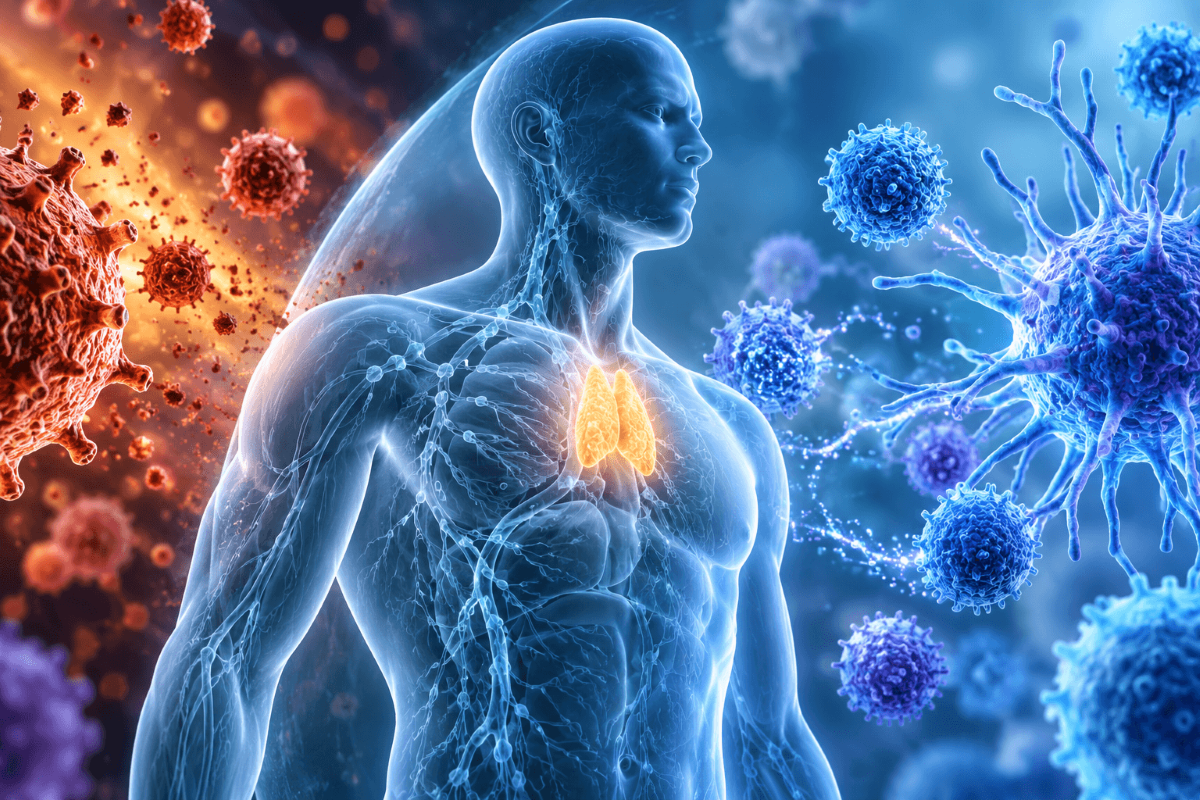
Thymosin Alpha 1 is one of the most extensively studied thymic peptides in the field of immunology. It has attracted scientific attention mainly because its biological role is not limited to the simple stimulation of a single group of immune cells. Research points to a much more complex picture - Thymosin Alpha 1 is being studied as a modulator of communication between innate and adaptive immunity, dendritic cells, T lymphocytes, and regulatory mechanisms that help maintain immune homeostasis.
It is a 28-amino-acid peptide naturally associated with the function of the thymus, one of the most important organs involved in T-cell development. In scientific literature, it may also be referred to as thymosin alpha, Tα1, or thymalfasin in its synthetic form.
Its ability to act at multiple levels of the immune response helps explain why thymosin alpha 1 remains a subject of research more than five decades after its discovery.
The immune system needs not only activation, but proper coordination
The immune system can be viewed as an extensive communication network. One part must rapidly recognize a potential threat, another processes the information, and then cells capable of producing a more targeted response are activated.
Innate immunity responds quickly and represents the first line of defense. Adaptive immunity is more specific and includes, for example, T and B lymphocytes that can respond to particular antigens.
An effective connection between these two systems is therefore essential.
This is precisely where Thymosin Alpha 1 becomes particularly interesting from a scientific perspective. Research suggests that it influences cells and signaling mechanisms located at the interface between innate and adaptive immunity. Rather than simply “switching on” immunity, its role in the organization and modulation of the immune response is of particular research interest.
Dendritic cells as the communication center of immunity
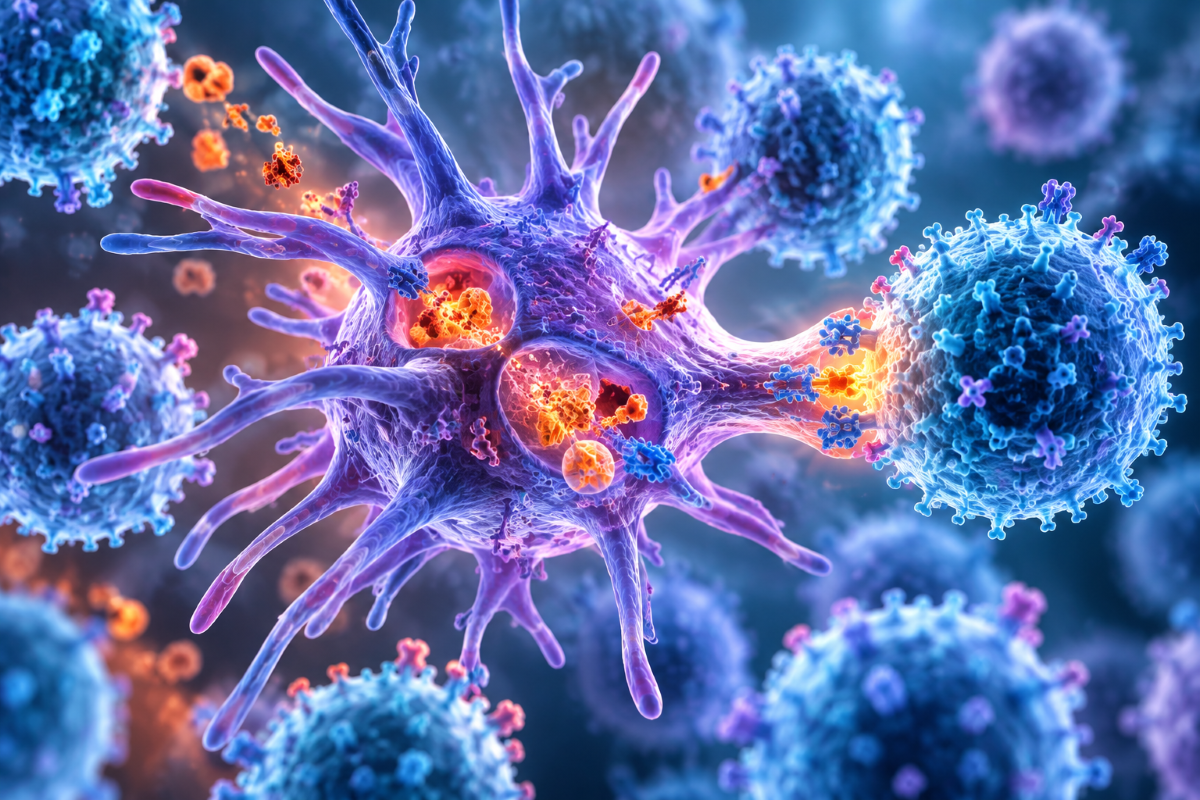
Dendritic cells are among the most important subjects of Thymosin Alpha 1 research.
These cells function as a kind of biological information hub. They are able to recognize signals associated with microorganisms or tissue damage, process antigens, and then pass this information on to T lymphocytes.
A dendritic cell therefore helps determine what type of immune response will follow.
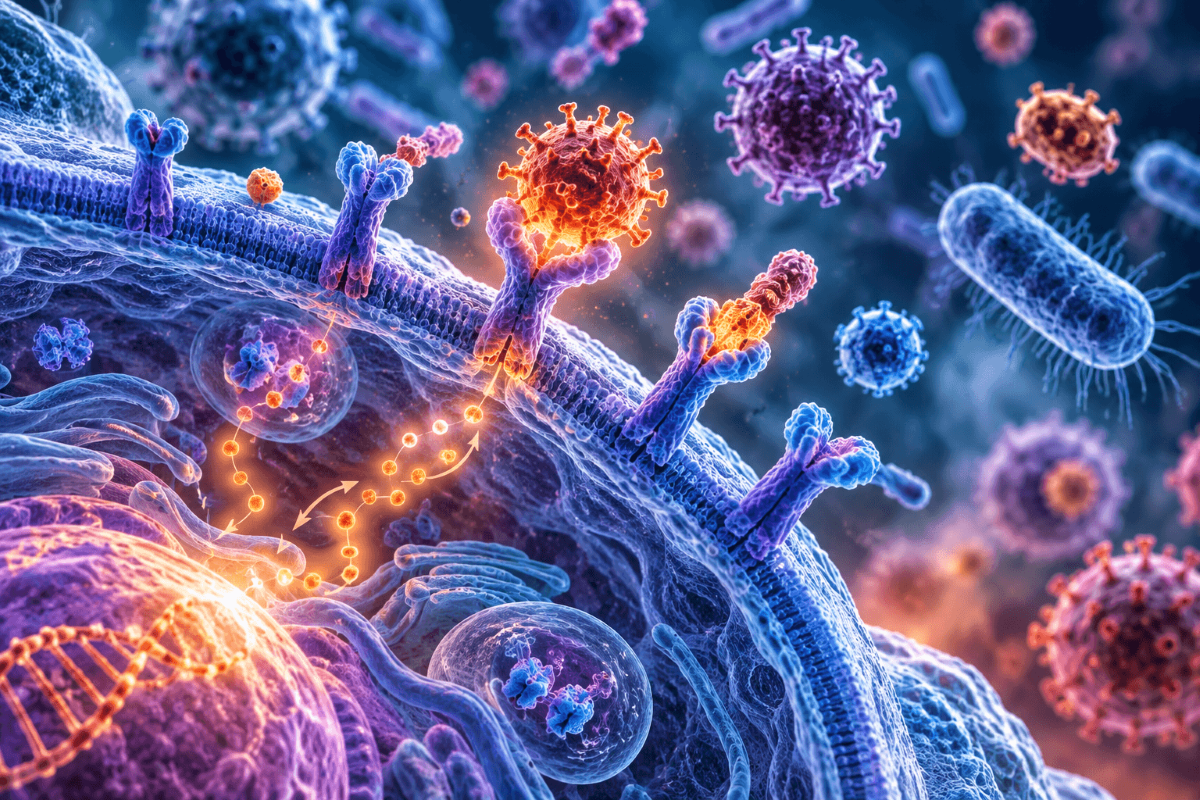
Research indicates that thymosin alpha 1 may influence dendritic cell function through Toll-like receptors and downstream signaling mechanisms. Depending on the experimental model, signaling associated with TLR receptors, MyD88, and other molecules that transmit information from the cell surface toward its interior has been described.
The ability to influence dendritic cells may explain a significant part of the broader immunomodulatory activity being investigated for this peptide.
Toll-like receptors: sensors that alert the immune system
Toll-like receptors, known as TLRs, are among the fundamental sensors of the innate immune system. They recognize certain molecular patterns associated, for example, with viruses, bacteria, or fungi.
Once TLRs are activated, a series of intracellular signals is triggered, which may subsequently affect cytokine production, dendritic cell activation, and other components of the immune response.
This area is particularly interesting in Thymosin Alpha 1 research because its activity involves TLR-dependent mechanisms in both myeloid and plasmacytoid dendritic cells. This creates a biological connection between the initial recognition of a signal and the subsequent adaptive immune response.
In simple terms, it is not only important for an immune cell to receive a signal. What matters just as much is how that signal is interpreted and what type of response is generated as a result.
From dendritic cells to T lymphocytes
T lymphocytes are among the main cells of adaptive immunity, and their development is closely linked to the thymus. This is also where the name “T cell” comes from.
Research on Thymosin Alpha 1 has long focused on its relationship with T-cell differentiation and function. Dendritic cells present antigens to T cells while also providing additional signals that influence the nature of the subsequent response.
Depending on the biological environment, different populations of T lymphocytes may then become activated, including helper CD4+ cells and cytotoxic CD8+ cells.
Research interest therefore focuses on several interconnected areas:
-
dendritic cells and antigen presentation,
-
T-cell differentiation and activity,
-
Th1 immune responses,
-
CD4+ and CD8+ cell populations,
-
NK cells,
-
cytokine production,
-
TLR/MyD88 signaling,
-
regulatory mechanisms that maintain immune balance.
This broad scope helps explain why thymosin is not studied merely as a simple immune stimulant, but as a molecule capable of influencing multiple communication points within the immune system.
A stronger response is not always a better response
One of the most interesting characteristics of Thymosin Alpha 1 is its association with immune homeostasis.
The immune system must be able to respond strongly enough to potential threats, while at the same time keeping that response under control. Excessive or misdirected activation can damage the body’s own tissues.
Research therefore highlights another aspect of Thymosin Alpha 1 - its relationship with mechanisms of immune tolerance.
Experimental studies have shown that Tα1 may activate mechanisms in dendritic cells associated with the enzyme indoleamine 2,3-dioxygenase, known as IDO. This pathway is linked to the regulation of inflammation, IL-10 production, and regulatory T cells. In experimental models, it has therefore been possible to observe both support for certain defense mechanisms and the establishment of a regulatory environment.
This is one reason why thymosin alpha is often described in modern scientific literature as an immunomodulator rather than simply an immune stimulant.
Immune homeostasis as a balance between response and tolerance
Homeostasis refers to the ability of a biological system to maintain internal balance despite constant changes in the environment. In immunity, this balance is particularly important.
The body must be able to recognize potentially harmful stimuli and respond to them, while at the same time tolerating its own cells and the many harmless antigens it encounters every day.
Dendritic cells and regulatory T lymphocytes are among the key mechanisms that help maintain this balance.
Research on Tα1 shows that the same peptide may, depending on the biological context, influence mechanisms associated with both immune activation and tolerance. This characteristic is one of the reasons why Thymosin Alpha 1 is of interest in both basic and applied immunological research.

Why is the thymus important in Thymosin Alpha 1 research?
The thymus is the organ in which T lymphocytes develop and undergo selection. It is highly active at a young age but gradually undergoes a process known as thymic involution.
As age increases, its structure changes and the production of new T cells declines. This process is one of the important components of age-related changes in the immune system.
The association of Thymosin Alpha 1 with the thymus has therefore also led to research into its role in the context of immunosenescence - the gradual changes in immune function associated with aging.
More recent scientific reviews focus specifically on the relationship between Tα1, T-cell differentiation, dendritic cells, and age-related immune changes. This represents another research direction that expands the perspective on this peptide far beyond a single immune response.
Thymosin Alpha 1 as a link between multiple levels of immunity
When these individual mechanisms are considered together, it becomes clearer why thymosin alpha 1 is being studied across such a broad range of experimental and clinical fields.
On one side are Toll-like receptors and innate immunity. Next are dendritic cells, which process and present information. Then come T lymphocytes and other effector cells of adaptive immunity. In parallel, regulatory mechanisms work to keep the overall response under control.
Thymosin Alpha 1 is being studied precisely at the intersection of these processes.
It is therefore interesting not only in terms of whether it can influence a specific immune cell, but above all in terms of how it may alter communication between different parts of the immune system.
Why does research on Thymosin Alpha 1 continue?
Modern immunology increasingly moves away from viewing the immune system as a simple switch that is either active or inactive.
In reality, it is a complex network of thousands of signals and interactions.
This is exactly why Thymosin Alpha 1 remains an interesting research peptide. Its activity is studied at the level of innate immunity, dendritic cells, T lymphocytes, cytokines, and regulatory mechanisms of immune tolerance.
Research continues today. For example, a study published in 2025 investigated the effects of Tα1 on several populations of human immune cells and identified different effects depending on the specific cell type, with a stronger transcriptional response observed in activated CD8+ T lymphocytes. The results also indicate that the effects of Tα1 should be evaluated according to the specific cellular and biological context.
Other areas of Thymosin Alpha 1 research
Communication between innate and adaptive immunity represents only one part of the extensive research into Tα1.
Research on Thymosin Alpha 1 in oncology, viral diseases, sepsis, and immunodeficiency is discussed in greater detail in the article: Thymosin Alpha 1: Research and Studies on Its Effects in Cancer Treatment and Immune Failure.
Basic information on T-cell function, dendritic cells, and the immune system can also be found in the article: Thymosin Alpha 1: A Scientific Perspective on Immune Restoration.
In this way, the individual topics complement one another without looking at thymosin alpha from the same perspective each time.
Conclusion
Thymosin Alpha 1 is a 28-amino-acid peptide that has gained an important place in immunology research, particularly because of its ability to influence multiple levels of immune communication.
Scientific interest focuses on its relationship with dendritic cells, Toll-like receptors, T lymphocytes, cytokine signaling, and mechanisms of immune tolerance. This connection between innate and adaptive immunity makes Tα1 an interesting model for studying how the body coordinates defensive responses while maintaining immune homeostasis.
Further research into Thymosin Alpha 1 may provide more detailed insights into how different cell populations and signaling pathways interact and why the same molecule may influence different parts of the immune response in different biological environments.
Thymosin Alpha 1 from Particle Peptides is intended exclusively for scientific research and development purposes.
Sources:
-
Romani L, Bistoni F, Montagnoli C, et al. Thymosin alpha1: an endogenous regulator of inflammation, immunity, and tolerance. Annals of the New York Academy of Sciences, 2007.
-
Romani L, Bistoni F, Perruccio K, et al. Thymosin alpha1 activates dendritic cell tryptophan catabolism and establishes a regulatory environment for balance of inflammation and tolerance. Blood, 2006.
-
Bonifazi P, D’Angelo C, Fallarino F, et al. Thymosin alpha1: the regulator of regulators? Annals of the New York Academy of Sciences, 2010.
-
Romani L, Bistoni F, Gaziano R, et al. Thymosin alpha 1 activates dendritic cells for antifungal Th1 resistance through Toll-like receptor signaling. Blood, 2004.
-
Dominari A, Hathaway D III, Pandav K, et al. Thymosin alpha 1: A comprehensive review of the literature. World Journal of Virology, 2020.
-
Li YR, Zúñiga-Pflücker JC. Thymus aging and immune reconstitution, progresses and challenges. Seminars in Immunology, 2023.
-
Simonova MA, Ivanov I, Shoshina NS, et al. Aging and Thymosin Alpha-1. International Journal of Molecular Sciences, 2025.
-
Solmonese M et al. The Immunomodulatory Activity of Thymosin Alpha 1 on Tumor Cell Lines and Distinct Immune Cell Subsets. 2025.
Research Quality Begins with Peptide Quality
At Particle Peptides, we believe that reliable research begins with reliable materials. That is why our research peptides are manufactured on cGMP-compliant production lines by a global pharmaceutical CDMO, and every batch undergoes independent third-party testing for:
- Purity
- Identity confirmation
- Peptide content
- Endotoxin levels
- Heavy metals (Class I & II)
- Microbial contamination (TAMC & TYMC)
Transparency and independently verified laboratory data form the foundation of high-quality scientific research.
Disclaimer: All Particle Peptides products are intended exclusively for scientific research and laboratory use. They are not intended for human or veterinary use, nor for the diagnosis, treatment, cure, or prevention of any disease.