
- today

DSIP (Delta Sleep-Inducing Peptide) is emerging at the forefront of modern neuroscience thanks to its unique influence on the regulation of sleep cycles. This naturally occurring neuropeptide supports comprehensive body regeneration, significantly improving overall vitality and the ability to cope with psychological stress.
Interest in DSIP has grown rapidly alongside discoveries confirming its effects on melatonin, cortisol, and pain perception. It is quickly moving from scientific laboratories into clinical practice, where researchers view it as a promising solution for treating chronic insomnia, burnout syndrome, neuropathic pain, and neurogenic adaptation disorders.
DSIP Stimulates the “Sleep Hormone”
Discovered in the 1970s during research into neuroregulatory processes associated with sleep and circadian rhythms, DSIP was primarily found in the hypothalamus, brainstem, and spinal cord, where it influences key functions of the central nervous system.
Preclinical studies suggest that DSIP may affect the balance between wakefulness and sleep, as well as responses to stress and pain perception.
DSIP modulates the non-REM phase of sleep, contributing to deep brain and body regeneration. Due to these specific effects, experts consider DSIP a potential alternative to hypnotics and anxiolytics, which are often associated with undesirable side effects. Neurophysiological analyses confirm that DSIP reduces nighttime awakenings and improves sleep quality without pharmacological burden.
Furthermore, DSIP influences the hypothalamic-pituitary-adrenal (HPA) axis, regulating the body’s response to psychological and physical stress and significantly lowering cortisol (the primary stress hormone). Higher DSIP levels correlate with better mental resilience, especially in individuals suffering from depression.
Additionally, DSIP stimulates the release of oxytocin and melatonin—two key hormones involved in emotional balance, social bonding, and sleep regulation. Melatonin, known as the body’s primary circadian rhythm regulator, synchronizes the body’s “internal clock” with natural light cycles. By enhancing endogenous melatonin production, DSIP optimizes the sleep cycle without the need for supplements, making it particularly valuable in the management of insomnia and other sleep disorders.
New Horizons in Cancer Treatment and Chronic Pain Relief
Researchers have also explored DSIP’s role in immune system modulation. Studies indicate that DSIP can influence immune responses by regulating inflammatory pathways and maintaining a balance between pro-inflammatory and anti-inflammatory cytokines. This positions DSIP as a potential therapeutic tool for autoimmune diseases and chronic inflammatory conditions.
Promising findings also point to DSIP’s anticancer properties. Animal model experiments have shown that long-term administration of DSIP reduces the incidence of spontaneous tumors, including breast carcinoma and leukemia. A study published in Mechanisms of Ageing and Development reported that Deltaran, a DSIP-based compound, decreased tumor occurrence in mice by over twofold compared to control groups.
Beyond its anti-inflammatory and anticancer effects, DSIP provides significant relief in neuropathic pain caused by nerve damage, often resistant to conventional medications. DSIP also helps alleviate fibromyalgia symptoms, characterized by widespread muscle pain and chronic fatigue. It acts directly on spinal neural pathways, modulating receptors responsible for pain signal transmission.
Applications Across Medicine and Sports Science
DSIP’s therapeutic potential spans multiple medical fields. By promoting deep sleep and reducing stress responses, it offers benefits in the treatment of insomnia, anxiety disorders, and psychosomatic conditions.
In sports medicine, DSIP accelerates post-exercise recovery by improving sleep quality, which is essential for muscle repair and immune system enhancement. Moreover, DSIP demonstrates high patient tolerability and is associated with minimal side effects.
Future Perspectives
Although DSIP research is still evolving, current data highlights its significant potential as a complementary therapy for sleep disorders, chronic stress, and neuropathic pain. Its excellent safety profile makes DSIP an attractive candidate for effective and well-tolerated therapeutic interventions.
Ongoing and future clinical studies are expected to provide deeper insights into its mechanisms of action and expand its therapeutic applications.
References / Links
- Born, J., & Hallschmid, M. (2006). The effects of sleep deprivation and subsequent recovery on the central nervous system. SpringerLink
- Bossy, M., & Lecoultre, C. (2006). Mechanisms of sleep regulation and their neuroendocrine control. Mechanisms of Ageing and Development
- Bongiovanni, C., & Baier, L. (1988). DSIP as a modulator of the human central nervous system. Biological Psychiatry.
- Pawlak, C., & Doussau, M. (2003). Delta sleep-inducing peptide (DSIP) and its effects on neuroinflammation. ScienceDirect
Research Quality Begins with Peptide Quality
At Particle Peptides, we believe that reliable research begins with reliable materials. That is why our research peptides are manufactured on cGMP-compliant production lines by a global pharmaceutical CDMO, and every batch undergoes independent third-party testing for:
- Purity
- Identity confirmation
- Peptide content
- Endotoxin levels
- Heavy metals (Class I & II)
- Microbial contamination (TAMC & TYMC)
Transparency and independently verified laboratory data form the foundation of high-quality scientific research.
Disclaimer: All Particle Peptides products are intended exclusively for scientific research and laboratory use. They are not intended for human or veterinary use, nor for the diagnosis, treatment, cure, or prevention of any disease.
Related products
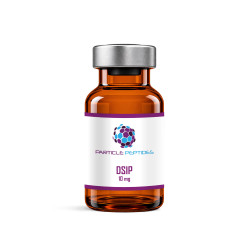
DSIP 10mg
- In stock
