
- today

Peptides for weight loss is a term used to describe various peptide molecules studied in connection with the regulation of body weight, appetite, energy expenditure, glucose and lipid metabolism, and hormonal signaling. However, these molecules do not constitute a single group of substances with the same mechanism of action. Individual peptides may act through different receptors and biological pathways, and the amount of scientific evidence available for each of them also varies considerably.
Molecules investigated in metabolic research include, for example, AOD-9604, MOTS-c, Ipamorelin, GHRP-2, Hexarelin, Mod GRF 1-29, CJC-1295 + DAC, and the experimental retatrutide (GLP-3). Each of these molecules represents a different area of research - from lipid metabolism and mitochondrial signaling to the growth hormone axis and GLP-1, GIP, and glucagon receptors.
When interpreting results, it is therefore always important to distinguish between cell-based research, animal studies, and clinical trials in humans.
What Are Peptides and Why Are They Studied in Metabolism?
A peptide is a molecule composed of amino acids linked by peptide bonds. Many peptides occur naturally in the body and function as signaling molecules. They may influence hormonal regulation, cellular communication, metabolism, or the activity of specific receptors.
This is precisely why peptides are the subject of intensive research across many areas of biology and medicine.
When it comes to body weight regulation, the process involves much more than simply “burning fat.” Energy balance results from the interaction of multiple systems, including the central nervous system, gastrointestinal tract, pancreas, liver, adipose tissue, skeletal muscle, and mitochondria.
Metabolic peptide research may therefore investigate, for example:
- appetite regulation and satiety,
- energy intake and expenditure,
- glucose metabolism,
- lipid metabolism,
- hormonal signaling,
- mitochondrial function,
- insulin sensitivity,
- activity of receptors associated with metabolism.
For this reason, the term peptides for weight loss cannot scientifically be reduced to substances whose sole purpose is to decrease body fat.
If you would like a broader explanation of what peptides are, how they function in the body, and why they have become an important subject of modern research, you can learn more in the article “Peptides: What They Are, How They Work, and Why They Are Studied in Scientific Research”.
Not All Peptides for Weight Loss Work Through the Same Mechanism
In the scientific literature, molecules investigated in metabolic research can be broadly categorized according to the biological systems on which the research focuses.
1. Peptides Studied in Relation to Lipid Metabolism
A typical example is AOD-9604, a modified fragment of human growth hormone.
2. Mitochondrial-Derived Peptides
This category includes MOTS-c, which is being studied in connection with energy homeostasis, glucose metabolism, and cellular adaptation to metabolic stress.
3. GHRH Analogs and Growth Hormone Secretagogues
This group includes, for example:
Research on these molecules primarily focuses on the regulation of growth hormone secretion and associated endocrine signaling.
4. Incretin and Multi-Receptor Molecules
A distinct and modern field of metabolic research focuses on receptor agonists associated with GLP-1, GIP, and glucagon. One example is the experimental molecule retatrutide (GLP-3).
Classifying all of these substances under a single mechanism would therefore be scientifically inaccurate.
Let us take a closer look at selected peptides for weight loss and the mechanisms and research areas most commonly associated with them.
AOD-9604: Research on Lipid Metabolism
AOD-9604 is a synthetic peptide analog derived from the C-terminal region of human growth hormone, specifically the HGH 176-191 region.
The molecule was developed to investigate certain metabolic properties of growth hormone without reproducing its full range of biological effects.
Research on AOD-9604 has focused primarily on:
- lipolysis,
- fat oxidation,
- adipose tissue metabolism,
- regulation of body weight in experimental models.
Because of this research profile, AOD-9604 is among the most frequently mentioned peptides for weight loss.
It has attracted particular scientific interest because of its relationship with lipolysis, fat oxidation, and adipose tissue metabolism. Preclinical models have investigated how this growth hormone fragment may influence the utilization of fat stores and processes associated with energy metabolism.
Its targeted focus on metabolic mechanisms related to adipose tissue is particularly interesting and is one of the reasons AOD-9604 remains a relevant molecule for further research into body weight, lipid metabolism, and energy regulation.
The available findings also demonstrate why AOD-9604 represents an interesting candidate from a scientific perspective for further investigation and for expanding our understanding of how specific growth hormone fragments may influence metabolic processes.

MOTS-c: When Mitochondria Communicate With the Cell
One of the most interesting areas of modern metabolic biology is the study of mitochondrial-derived peptides.
One such peptide is MOTS-c, a small peptide encoded by the mitochondrial genome.
Mitochondria have traditionally been described primarily as the “powerhouses of the cell” because of their essential role in energy production. Today, however, we know that their role is much broader. Mitochondria actively communicate with other parts of the cell and participate in the regulation of metabolism, cellular stress responses, and energy homeostasis. MOTS-c is being investigated precisely within this context.
According to experimental observations, during metabolic stress MOTS-c may translocate to the cell nucleus and influence the expression of genes associated with cellular adaptation to altered energy conditions.
Research on MOTS-c investigates areas including:
- glucose metabolism,
- insulin sensitivity,
- energy homeostasis,
- lipid oxidation,
- mitochondrial function,
- metabolic stress responses,
- processes associated with aging.
Significant attention is also being paid to the AMPK signaling pathway, which functions as one of the main sensors of the cellular energy state.
This is why MOTS-c frequently appears in discussions about peptides for weight loss, although its scientific significance is considerably broader.
It is more accurate to describe it as a mitochondrial peptide studied in connection with metabolic regulation rather than simply as a “fat burner.”
If you are interested in MOTS-c in greater detail, you can learn more about its mitochondrial origin, mechanisms of action, and research into energy metabolism in the dedicated article “MOTS-c: A Scientific look at the mitochondrial key to energy and youth Youth”.

Ipamorelin: A More Selective Approach to Growth Hormone Secretion Research
Ipamorelin is a synthetic pentapeptide studied as a growth hormone secretagogue.
Its primary mechanism is associated with activation of the GHSR receptor system and subsequent release of growth hormone.
Compared with some older secretagogues, it is particularly interesting because of its relative selectivity. Experimental research has observed stimulation of growth hormone without an equally pronounced increase in ACTH or cortisol, which may occur with some other substances in this group.
From the perspective of metabolic research, the growth hormone axis is of interest because it is associated with several biological processes, including:
- lipid metabolism,
- protein metabolism,
- body composition,
- bone metabolism,
- IGF-1 signaling.
This does not, however, mean that stimulation of growth hormone itself automatically translates into a clinically confirmed weight-loss effect.
Here too, it is important to distinguish between a biological mechanism and a specific clinical outcome.
If you are interested in Ipamorelin in greater detail, you can read more about its selectivity, its mechanism of action through GHSR, and research into growth hormone secretion in the dedicated article “Ipamorelin: A Scientific Perspective on a Selective Growth Hormone Secretagogue”.

GHRP-2 and Hexarelin: The Ghrelin Receptor and Neuroendocrine Signaling
GHRP-2, also known as pralmorelin, belongs to the group of synthetic peptides that stimulate growth hormone secretion.
It activates the growth hormone secretagogue receptor and is also associated with the ghrelin receptor system.
Ghrelin is an especially interesting hormone because it connects several biological processes at the same time. It is involved in appetite regulation and energy balance while also being capable of stimulating growth hormone secretion. This demonstrates why the term peptides for weight loss can sometimes be misleading. Not all molecules investigated in metabolic research necessarily influence appetite in the same direction.
Hexarelin, also known as Examorelin, is a synthetic GHSR receptor agonist studied primarily in connection with growth hormone secretion and neuroendocrine signaling. It has also attracted research interest because of its investigated cardiovascular and cardioprotective mechanisms.
Experimental studies of Hexarelin have examined not only changes in growth hormone levels but also the broader hormonal response of the body. This suggests that its biological activity is more complex and is not limited to a single signaling pathway.
From a metabolic perspective, Hexarelin is therefore particularly interesting as a molecule through which the relationships between GHSR, growth hormone, energy regulation, and other neuroendocrine processes can be investigated.
If you are interested in Hexarelin in greater detail, you can read more about its mechanism of action, research into growth hormone secretion, neuroendocrine signaling, and the results of scientific studies in the dedicated article “Hexarelin: Effects, Mechanism of action, and findings from Scientific Studies”.
Mod GRF 1-29 and CJC-1295 + DAC: Research on GHRH and the GH/IGF-1 Axis
Another group within metabolic research consists of analogs of growth hormone-releasing hormone - GHRH.
Mod GRF 1-29 (CJC-1295 no DAC) is a synthetic GHRH analog created by modifying the original GRF 1-29 sequence. Its primary research significance lies in its ability to activate the GHRH receptor in the pituitary gland and stimulate the physiological release of growth hormone.
CJC-1295 + DAC follows a similar molecular principle but is modified using a so-called Drug Affinity Complex. DAC allows the molecule to bind to albumin in the blood, significantly prolonging its circulation and biological half-life.
Clinical pharmacology research in healthy adults has shown that CJC-1295 can increase growth hormone and IGF-1 levels for several days. Interestingly, the research also investigated the preservation of the pulsatile pattern of growth hormone secretion.
This is an important distinction compared with simply stating that a molecule “increases GH.”
From the perspective of metabolic research, Mod GRF 1-29 and CJC-1295 + DAC are particularly relevant because of their effects on the GH/IGF-1 axis, which is also associated with lipid metabolism and body composition.
However, even with these molecules, an increase in GH alone cannot automatically be interpreted as clinically confirmed weight loss.
If you would like to learn more about how DAC influences the pharmacokinetics of CJC-1295, its biological half-life, and endocrine response, you can find additional information in the dedicated article “CJC-1295 With DAC vs. Without DAC: Differences in Pharmacokinetics, Mechanism of Action, and Endocrine Response”.
Retatrutide: A New Direction in Multi-Receptor Metabolic Research
A distinct and highly interesting category of metabolic research is represented by retatrutide (LY3437943), which is available from Particle Peptides under the designation GLP-3.
From a scientific perspective, it is an experimental triple agonist of three receptor systems:
- GLP-1,
- GIP,
- the glucagon receptor.
Retatrutide therefore does not belong to the category of conventional growth hormone secretagogues or mitochondrial peptides. Its research rationale lies in combining several metabolic signals simultaneously.
GLP-1 and GIP are associated with the regulation of glucose metabolism and food intake, while the glucagon receptor may influence energy expenditure and other metabolic processes.
It is precisely this combination of three receptor targets that makes retatrutide particularly interesting for modern research into obesity and metabolic disorders.
In a Phase 2 clinical trial, the highest dose studied was associated with an average reduction in body weight of approximately 24.2% after 48 weeks.
Compared with several of the other molecules discussed in this article, retatrutide therefore has substantially more extensive clinical data focused directly on body weight.
Nevertheless, it remains an experimental molecule, and when interpreting the data it is necessary to distinguish between clinical trial results and a treatment that has received regulatory approval.
If you are interested in retatrutide (GLP-3) in greater detail, you can read more about its triple mechanism of action, activation of GLP-1, GIP, and glucagon receptors, and the current direction of metabolic research in the dedicated article “What Is GLP-3? Exploring the research behind a Triple GLP-1, GIP, and Glucagon Receptor Agonist”.

Peptides and Their Effects From a Scientific Perspective
The effects of peptides are evaluated in scientific research according to the specific molecule, its mechanism of action, and the type of studies available. Some peptides affect receptors associated with hormonal signaling, while others are investigated in relation to mitochondrial function, lipid metabolism, or energy homeostasis.
The phrase peptides and their effects may create the impression that there is one common list of properties shared by all peptides. This is not the case. Individual molecules may have completely different primary mechanisms:
| Molecule | Primary Area of Research |
| AOD-9604 | lipid metabolism |
| MOTS-c | mitochondrial signaling and energy homeostasis |
| Ipamorelin | GHSR and growth hormone secretion |
| GHRP-2 | ghrelin/GHSR and GH |
| Hexarelin | GHSR and neuroendocrine signaling |
| Mod GRF 1-29 | GHRH receptor |
| CJC-1295 + DAC | prolonged stimulation of the GH/IGF-1 axis |
| Retatrutide | GLP-1, GIP, and glucagon receptor |
For this reason, each molecule must be evaluated individually and always within the context of the specific scientific evidence available.
Preclinical vs. Clinical Research: Why Is This Distinction Important?
When reading articles about peptides for weight loss, it is useful to ask one fundamental question:
In what model was the result obtained?
Cell-Based Research
An experiment may be conducted on isolated cells or receptors. Such studies help researchers understand mechanisms, but they do not demonstrate an effect in an entire organism.
Animal Models
Preclinical experiments make it possible to investigate more complex biological processes. However, findings obtained in mice or rats cannot automatically be extrapolated to humans.
Clinical Trials
Research in humans provides the most relevant information about effects and safety in people. However, clinical trials also vary in their strength of evidence depending on their phase, number of participants, duration of follow-up, and method of control.
For this reason, the statement “research has shown” is not sufficient on its own. It is important to know what type of research produced the finding.
Peptides and Their Side Effects: Safety Is Specific to Each Molecule
There is no single safety profile shared by all peptides.
AOD-9604 has a different structure and mechanism from MOTS-c. Ipamorelin acts differently from retatrutide. CJC-1295 has different pharmacokinetics from Mod GRF 1-29.
Safety data also depend on the extent of available research.
For some molecules, the available evidence consists primarily of cell-based and animal studies, while others have also been investigated in extensive clinical trials. This is another reason why safety should not be assessed solely on the basis that a substance is a “peptide.”
Peptides for Weight Loss: User Experiences vs. Scientific Evidence
Personal user experiences are also frequently discussed in relation to peptides for weight loss. From a scientific perspective, however, these cannot be considered equivalent to the results of controlled studies.
Individual outcomes may be influenced by numerous factors, including:
- dietary changes,
- caloric intake,
- physical activity,
- other substances being used,
- the placebo effect,
- natural fluctuations in body weight.
With research substances, another potential issue is unverified identity or the actual content of the product.
Published scientific evidence should therefore take precedence over anecdotal experiences when evaluating a peptide professionally.
Peptides Sold for Research Purposes: Why Purity Alone Is Not Enough
When selecting research peptides, the decision should not be based solely on declared purity or product price. A value such as 99% purity represents only one part of the overall picture of research sample quality.
For laboratory materials, the following parameters should be monitored in particular:
- identity confirmation,
- purity,
- peptide content,
- endotoxin content,
- microbial burden,
- heavy metal content,
- batch-to-batch consistency,
- analytical documentation,
- traceability of the specific batch.
For this reason, when purchasing peptides for research purposes, it is important to consider not only the purity percentage itself but also the extent of quality control and the availability of verifiable documentation.
At Particle Peptides, we draw on many years of professional experience and specialized expertise in research peptides, and every product undergoes extensive analytical quality control. For all products, we present and provide independent analyses of peptide purity, identity confirmation, active substance content, endotoxins, Class 1 and Class 2 heavy metals, and microbial burden, with all monitored limits established in accordance with the requirements of the European Pharmacopoeia (Ph. Eur.).
Price, Origin, and Quality of Research Peptides
Several factors play a role when selecting research peptides, and peptide price is only one of them. For reliable research, it is equally important to know the identity and purity of the product, its actual content, and whether verifiable analytical documentation is available for the specific batch.
The quality and consistency of research material can significantly influence the reproducibility of an experiment and the interpretation of its results. When comparing different offers, it therefore makes sense to consider not only price but also the scope of testing, supplier transparency, and traceability of individual batches.
When selecting peptides in the EU, the European origin of the supplier, simpler logistics, and easier access to documentation may also represent practical advantages. Particle Peptides ships orders from Slovakia, a member state of the European Union, and provides its products exclusively as research substances intended for scientific purposes.
Frequently Asked Questions About Peptides for Weight Loss
What Are Peptides for Weight Loss?
Peptides for weight loss is an informal term for various peptide molecules studied in connection with body weight regulation and metabolism. They may influence different systems—for example, lipid metabolism, mitochondria, growth hormone, or receptors associated with appetite and glucose regulation.
Do All Peptides for Weight Loss Work in the Same Way?
No. AOD-9604, MOTS-c, Ipamorelin, CJC-1295, and retatrutide have different mechanisms and cannot be considered a single pharmacological group.
What Is AOD-9604?
AOD-9604 is a synthetic analog of a human growth hormone fragment studied primarily in connection with lipid metabolism, lipolysis, and adipose tissue metabolism.
What Is MOTS-c?
MOTS-c is a mitochondrial-derived peptide studied in connection with energy homeostasis, glucose metabolism, AMPK signaling, and the metabolic response of cells to stress.
What Is CJC-1295 + DAC?
CJC-1295 + DAC is a modified GHRH analog. DAC prolongs its circulation, and research primarily investigates its ability to exert a longer-lasting influence on growth hormone and IGF-1 secretion.
What Is Retatrutide?
Retatrutide (LY3437943) is an experimental triple agonist of the GLP-1, GIP, and glucagon receptors studied in the field of obesity and metabolic disorders.
Do All Peptides Have the Same Side Effects?
No. The safety profile depends on the specific molecule, its mechanism of action, and the amount of available preclinical and clinical evidence.
Are User Experiences Reliable Evidence?
No. Individual experiences cannot be considered a substitute for controlled scientific studies.
What Are Particle Peptides Products Intended For?
Particle Peptides products are intended exclusively for scientific research and development purposes. They are not intended for human consumption, self-treatment, or use as medicines or dietary supplements.
Conclusion
Peptides for weight loss represent a broad and scientifically diverse field of metabolic research. Individual molecules are investigated through different mechanisms—from lipid metabolism in the case of AOD-9604 and mitochondrial signaling in the case of MOTS-c to growth hormone regulation involving Ipamorelin, GHRP-2, Hexarelin, Mod GRF 1-29, and CJC-1295 + DAC. Retatrutide represents a separate category by combining activation of the GLP-1, GIP, and glucagon receptors.
The diversity of these mechanisms demonstrates why each peptide must be evaluated individually and always within the context of the available scientific evidence. In research, an important role is therefore played not only by the biological mechanism itself but also by the quality of the studies, the reliability of the research material, and the transparency of analytical documentation.

Sources:
- Heffernan MA et al. The effects of human GH and its lipolytic fragment (AOD9604) on lipid metabolism following chronic treatment in obese mice. Endocrinology. 2001.
- Lee C et al. The mitochondrial-derived peptide MOTS-c promotes metabolic homeostasis and reduces obesity and insulin resistance. Cell Metabolism. 2015.
- Wan W et al. Mitochondria-derived peptide MOTS-c: effects and mechanisms related to stress, metabolism and aging. Journal of Translational Medicine. 2023.
- Raun K et al. Ipamorelin, the first selective growth hormone secretagogue. European Journal of Endocrinology. 1998.
- Arvat E et al. Effects of GHRP-2 and hexarelin on GH, prolactin, ACTH and cortisol levels in man. Peptides. 1997.
- Teichman SL et al. Prolonged stimulation of growth hormone and insulin-like growth factor I secretion by CJC-1295 in healthy adults. Journal of Clinical Endocrinology & Metabolism. 2006.
- Ionescu M, Frohman LA. Pulsatile secretion of growth hormone persists during continuous stimulation by CJC-1295. Journal of Clinical Endocrinology & Metabolism. 2006.
- Jastreboff AM et al. Triple-Hormone-Receptor Agonist Retatrutide for Obesity - A Phase 2 Trial. New England Journal of Medicine. 2023.
- Particle Peptides Overview - internal expert materials on research peptides, quality, and analytical testing.
- Particle Peptides - Brand Positioning & Marketing Guidelines (2026) - internal materials on the quality-control system, independent testing, and batch transparency.
Research Quality Begins with Peptide Quality
At Particle Peptides, we believe that reliable research begins with reliable materials. That is why our research peptides are manufactured on cGMP-compliant production lines by a global pharmaceutical CDMO, and every batch undergoes independent third-party testing for:
- Purity
- Identity confirmation
- Peptide content
- Endotoxin levels
- Heavy metals (Class I & II)
- Microbial contamination (TAMC & TYMC)
Transparency and independently verified laboratory data form the foundation of high-quality scientific research.
Disclaimer: All Particle Peptides products are intended exclusively for scientific research and laboratory use. They are not intended for human or veterinary use, nor for the diagnosis, treatment, cure, or prevention of any disease.
Related products

AOD-9604 5mg
- Auf Lager
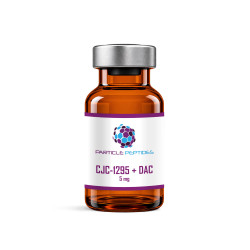
CJC-1295 + DAC 5mg
- Auf Lager

GHRP-2 5mg
- Auf Lager

Hexarelin 5mg
- Auf Lager

Ipamorelin 5mg
- Auf Lager