
- today
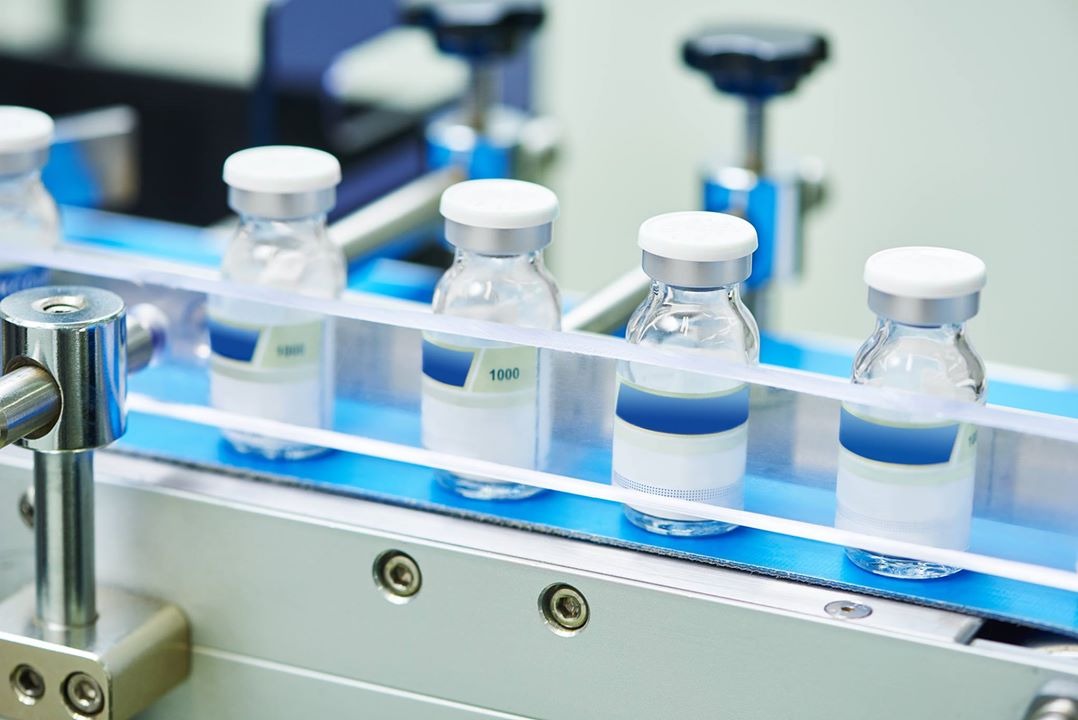
Building on the compound NNC 26-0194 [3-(4-imidazolyl) propionyl-D-Phe-Ala-Trp-D-Phe (CH2NH) Lyzol], researchers at Novo Nordisk developed NNC 26-0161 (ipamorelin). Ipamorelin is capable of inducing massive growth hormone secretion and is effective via intravenous (i.v.), intramuscular, and subcutaneous administration, and interestingly, also through iontophoretic transdermal delivery.
Ipamorelin demonstrates linear pharmacokinetics.
Time – Ipamorelin Concentration
This growth hormone–releasing peptide in a typical subject has a terminal half-life of at least 2 hours, with a systemic clearance of 0.078 l/h/kg and a steady-state volume of distribution of 0.22 l/kg. A large molecule such as a peptide is primarily localized within the central compartment, and thus a small volume of distribution is expected.
In young prepubertal children, GHRP-2 showed a small distribution volume (0.32 l/kg) and a half-life of 1.5 hours. Ipamorelin has a 25% longer half-life than GHRP-2.
Effect of ipamorelin on growth hormone
Growth hormone concentration rises sharply to a peak at approximately 0.67 hours and declines to very low levels by 6 hours at all dose levels. The peak GH concentration occurs after the peak plasma concentration of ipamorelin. Plasma ipamorelin levels persisted longer than plasma GH levels and continued to drive smaller pulses.
Let us consider Rasmussen’s work published in Growth Hormone & IGF Research – A New and Very Potent Growth Hormone Secretagogue.
In a randomized, double-blind, placebo-controlled, parallel-group study with single-dose and dose-escalation design, the pharmacokinetics of ipamorelin, a novel pentapeptide GH secretagogue, and its effects on GH secretion were investigated. Eight healthy male volunteers (6 active, 2 placebo) at each of five dose levels received the investigational product as a 15-minute i.v. infusion. Doses 1–5: 0.003, 0.01, 0.03, 0.06, and 0.1 mg/kg, in that order.
A 10-hour plasma profile of ipamorelin was determined for dose levels 1–3, and a 24-hour plasma profile was determined for dose levels 4 and 5. A 10-hour plasma GH profile was established for all dose levels. No serious adverse events were reported, and no participants discontinued the study due to adverse effects.
Cmax and AUC of ipamorelin increased with dose, ranging from 30–809 nmol/l and 68–1823 nmol*h/l, respectively. The elimination half-life ranged from 2.4 to 3.1 hours for the three lowest doses and 6.4 and 5.5 hours for dose levels 4 and 5.
Remarkably, at high doses, ipamorelin remained active for 5 hours or more. This indicates that at a dose of approximately 4 mg, ipamorelin remains effective in plasma for up to 5 hours. This finding suggests the presence of a deep compartment, which became apparent only after longer sampling intervals or higher doses.
Ipamorelin was able to stimulate GH secretion in a dose-dependent manner, with Cmax values ranging from 20–223 mU/l and AUC values from 30–373 mU*h/l. For comparison, the mean GH Cmax in placebo subjects was 11 mU/l—demonstrating significant GH secretion.
Although linearity between ipamorelin and GH was demonstrated with respect to AUC and Cmax, the maximum GH concentration was achieved at a dose level of 0.06 mg/kg, indicating that 0.06 mg/kg is the maximally effective dose.
In conclusion, ipamorelin is capable of inducing massive growth hormone secretion in healthy male subjects.
References / Links
- Rasmussen, M.H., Sogaard, B., Ynddal, L., Groes, L., Helmgaard, L. a Nordholm, L. (1998) Ipamorelin – a very potent novel growth hormone secretagogue. Proceedings of 80th Annual Meeting Endocrine Society, New Orleans, USA. Abstr Str.1-185 PubMed
- Brosnan-Cook, M. a kol. (1998) Iontophoretic delivery of ipamorelin, a growth hormone secretagogue. Proceedings of 80th Annual Meeting Endocrine Society, New Orleans, USA. Abstr Str. 1-186 PubMed
- Pharmacokinetic-Pharmacodynamic Modeling of Ipamorelin, a Growth Hormone Releasing Peptide in Human Volunteers, Jogarao V S Gobburu; Henrik Agerso; William J Jusko; Lars Ynddal Pharmaceutical Research; Sep 1999; 16, 9; ProQuest Nursing & Allied Health Source Str.. 1412 Full text
- Pharmacokinetics and Pharmacodynamics of Growth Hormone-Releasing Peptide-2: A Phase I Study in Children1 Catherine Pihoker, Gregory L. Kearns, Daniel French a Cyril Y. Bowers, The Journal of Clinical Endocrinology & Metabolism Vol. 83, č. 4 1168-1172 PubMed
-
Rasmussen 1 v Growth Hormone & IGF Research Volume 8, Issue 4. August 1998, page 332P-11 IPAMORELIN – A NEW AND VERY POTENT GROWTH HORMONE SECRETAGOGUE MH Rasmussen, B Soogaar, L YnddaI, L Groes, L Helmgaard, L Nordholm. Novo Nordisk A/S, Klinický vývoj, Bagsvaerd, Dánsko. ScienceDirect
Research Quality Begins with Peptide Quality
At Particle Peptides, we believe that reliable research begins with reliable materials. That is why our research peptides are manufactured on cGMP-compliant production lines by a global pharmaceutical CDMO, and every batch undergoes independent third-party testing for:
- Purity
- Identity confirmation
- Peptide content
- Endotoxin levels
- Heavy metals (Class I & II)
- Microbial contamination (TAMC & TYMC)
Transparency and independently verified laboratory data form the foundation of high-quality scientific research.
Disclaimer: All Particle Peptides products are intended exclusively for scientific research and laboratory use. They are not intended for human or veterinary use, nor for the diagnosis, treatment, cure, or prevention of any disease.
