

Endotoxin Testing: Why It Matters in Peptide Quality Assessment

Peptide Certificate of Analysis: How to Verify a COA and Identify Authentic Laboratory Reports
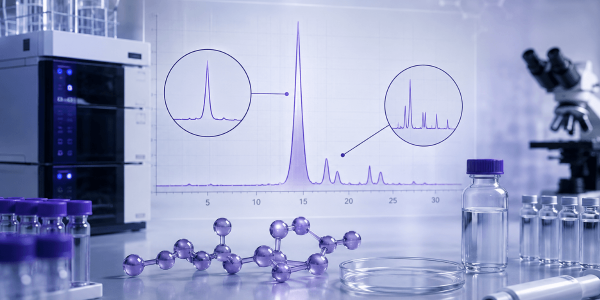
HPLC Purity: Why It Is Not Enough to Define Peptide Quality

Peptide Quality: A Comprehensive Guide to Laboratory Quality Assessment
Peptide quality is determined by more than purity alone. A complete assessment includes identity, peptide content, endotoxins, heavy metals, microbial testing, batch consistency, and traceability. Together, these laboratory parameters provide a clearer picture of overall peptide quality.
Selank: A Scientific Perspective on Its Effects and Mechanism of Action
Selank is a synthetic peptide derived from tuftsin and studied for its potential influence on anxiety-related pathways, GABAergic signaling, serotonin metabolism, memory, and immune regulation. Some small human studies have explored its anxiolytic effects, but most evidence on its mechanisms still comes from animal and cellular research. More high-quality clinical studies are needed to confirm its effects in humans.
Hexarelin: Effects, Mechanism of Action, and Findings from Scientific Studies
Hexarelin (Examorelin) is a synthetic growth hormone secretagogue that activates the GHS-R1a receptor and has been shown in human studies to stimulate growth hormone release. Research has also explored its potential effects on cardiovascular function, lipid and glucose metabolism, mitochondrial activity, and skeletal muscle. However, most of these additional findings come from animal and cellular studies and have not yet been confirmed as therapeutic effects in humans.
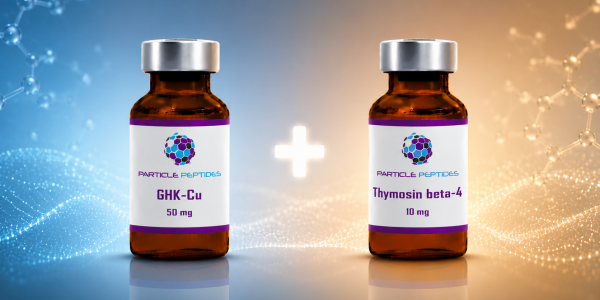
GHK-Cu + Thymosin Beta-4 (TB-500): A Research Combination for the Study of Skin Regeneration and Tissue Remodeling
GHK-Cu and Thymosin Beta-4 (TB-500) are among the most extensively studied peptide combinations in skin and soft tissue regeneration research. Their complementary biological mechanisms have made them a key focus of preclinical studies investigating extracellular matrix remodeling, angiogenesis, collagen synthesis, and cell migration.

BPC-157 + Thymosin Beta-4 (TB-500): Why Is This Combination Among the Most Extensively Studied in Tissue Regeneration Research?
BPC-157 and Thymosin Beta-4 (TB-500) are among the most extensively studied peptide combinations in tissue regeneration research. Their complementary biological mechanisms have made them a key focus of preclinical studies investigating soft tissue repair, angiogenesis, and cell migration.

CJC-1295 Without DAC and Ipamorelin: What Does Research Show About This Pair of GH Secretagogues?
The combination of CJC-1295 without DAC and Ipamorelin is among the most widely discussed pairs of GH secretagogues. Research suggests that by activating two distinct regulatory pathways, this combination may support a more natural and physiologically complex pattern of growth hormone secretion.
What Is GLP-3? Exploring the Research Behind a Triple GLP-1, GIP, and Glucagon Receptor Agonist
GLP-3 is an experimental peptide that simultaneously activates GLP-1, GIP, and glucagon receptors. Research suggests that it may influence appetite, energy expenditure, and glucose and lipid metabolism. This triple-receptor mechanism makes it one of the most promising molecules in current metabolic research, while its long-term effects continue to be evaluated.